

Vegan Boorsok
Ingredients
2 cups (250g) flour
1 cup (237ml) warm water
2 tbsp oil
2 tsp yeast
1 tsp sugar
Instructions
- Combine ingredients in a bowl. Mix to create a dough, then cover and let sit for at least two hours.
- After the dough has risen, heat oil over medium high heat.
- Take a fistful of dough and flatten it on a floured surface. Cut it into small squares, adding each square to the oil. Fry until fluffy and golden, then flip.
- Remove from the oil and let drain on a paper towel or drying rack. Serve with jam or honey.
A longer and more detailed description
I have a challenge for you. It’s a tough one, but I believe in you. Ready?
What is the difference between boorsok and oliebollen? Or any fried dough, really? There’s a few differences, but I put it to you that all these fried dough recipes are more or less iterations on the same idea - I have dough. I have oil. I have dough in oil.
And I’m not faulting anyone for that. It’s delicious, and I love it.
Boorsok is very much part of this family. It’s easy to make, delicious to eat, and a fun experiment. Start by making your dough well in advance. My particular dough is on the dry side because that’s how I like my dough, but feel free to make whatever consistency you would like. After you’ve let it sit and yeastify for a bit, flatten it, one fistful at a time, cut it into squares, then fry each one. Fry them until they turn golden brown and delicious looking, flip them, then rescue them from the oil. Douse them in whatever you’d like (or eat them straight), and Тамагыңыз даамдуу болсун!
Substitutions and suggestions
For the topping: I had mine with strawberry jam, which wasn’t my favourite. I recommend using whatever jam, honey, honey substitute, or thing you enjoy dipping sweet breads in you have lying around. Boorsok is flexible.
What I changed to make it vegan
Boorsok is naturally vegan!
What to listen to while you make this
Oh honey. Oh dear. Oh, just have a look at the write-up after this.
The write-up after this
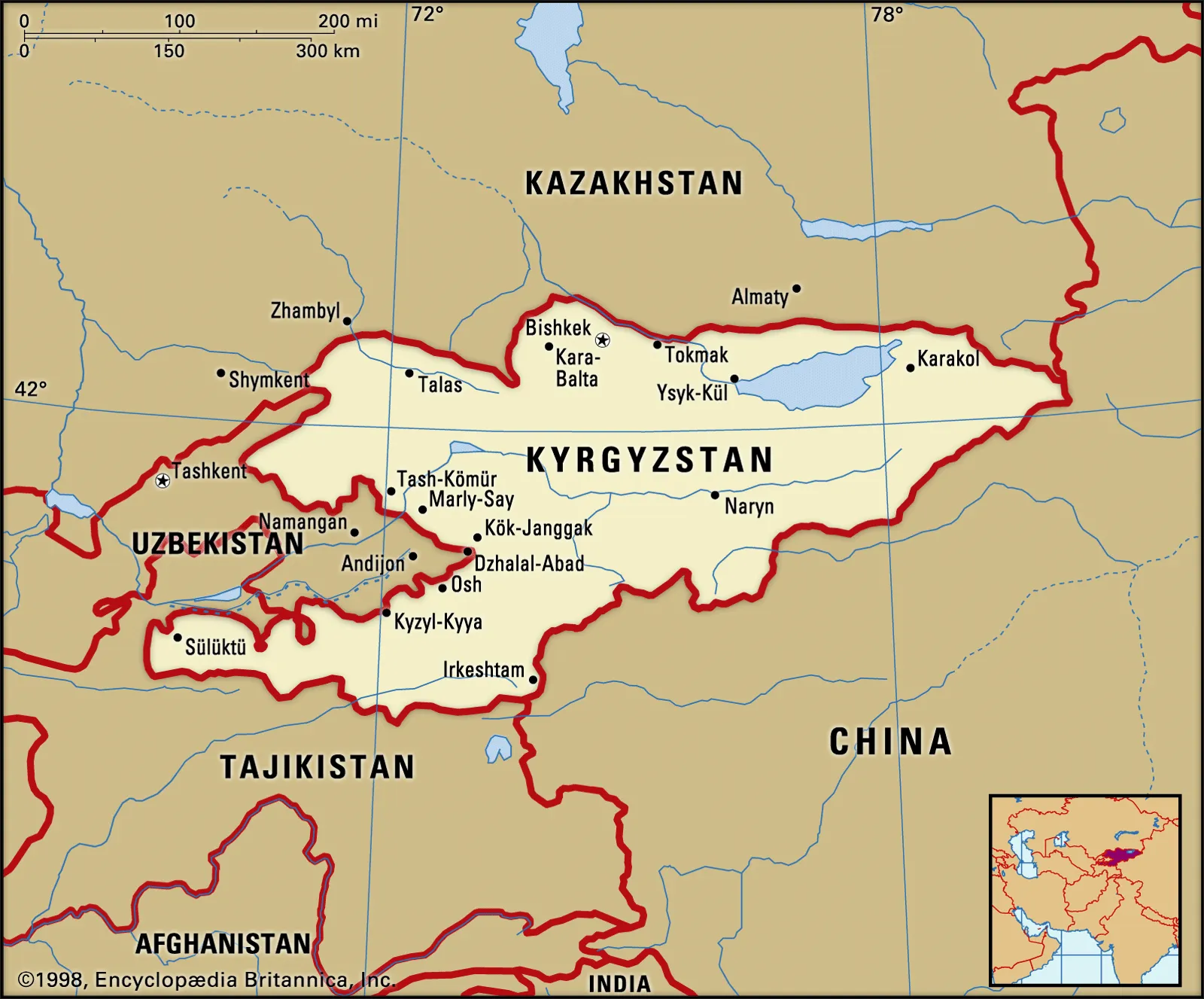
A couple of weeks ago, we discussed Kazakh cuisine and, unsurprisingly, Kyrgyz and Kazakh cuisine have a fair bit of overlap. While the particular Kazakh dish we made in this series isn’t a Kyrgyz one, the traditional, heavily-meat-based cuisine of Kyrgyzstan is such because of the shared nomadic tradition. Kyrgyz cuisine is defined by meat and milk and the herbs that could be found while herders and nomads followed their herds. This particular dish is easily made in the giant pans nomadic groups would carry with them, though the introduction of wheat is relatively recent in the scheme of Kyrgyz cuisine.
I’m going to be honest, while Kyrgyz cuisine and how it reflects on Kyrgyz culture and history is just as interesting as any other country’s cuisine, that’s not what interests me in this post.
Did you know Kyrgyzstan is a massive market for K-Pop?
 Bands competing at the 2017 K-Pop festival in Bishkek (Source: Kloop.kg)
K-pop has become a more and more mainstream music genre, with acts like BTS being some of the biggest in the world. The style and structure of bands and groups are being reproduced around the world, with Z-pop being the term for non-Korean K-pop groups. That there are other places with K-pop groups isn’t surprising - that’s the nature of culture. It diffuses, and it brings meaning to everyone engaging with it.
It’s when you peek under the geopolitical curtain that K-pop’s prevalence in Kyrgyzstan becomes interesting. South Korea has been investing heavily in not only Kyrgyzstan, but central Asia more generally, seeing in the region an opportunity to put an economic check on both Chinese and Russian influence. Kyrgyzstan has been a particular beneficiary of this, having seen an economic boom since the outbreak of the Russia-Ukraine war.
One consequence of this investment, however, is that it’s not solely an economic investment. Along with South Korean capital comes elements of South Korean culture. Kyrgyzstan is increasingly a filming location and a home to various elements of South Korean culture.
 Bands competing at the 2017 K-pop festival in Bishkek (Source: Kloop.kg)
K-pop, for South Korea, is not solely music. K-pop is very much a product, with bands’ images and messages tightly controlled, not only by the industry, but by the government itself. K-pop is as much an element of South Korea’s geopolitics as the capital is, creating a positive image of South Korea and helping drive international policy towards being friendlier to Korean interests.
It’s simple enough for Korean firms and governmental interests to pour money into central Asia. However, in investing in a long-term relationship with its people, South Korea builds a more reliable sense of goodwill, not only with those currently in power, but with those who will be. In one article about Kazakh (I know Kyrgyzstan and Kazakhstan aren’t the same, but the article is interesting) youth and their views of Korean culture, there is an overwhelming sense of positivity about South Korea, life there, what it means to be Korean, and Korean culture. In some ways, it’s reminiscent of the weeaboo culture in the United States and the influence of Japanese media on perceptions of Japan, though there are obvious differences.
 Bands competing at the 2017 K-pop festival in Bishkek (Source: Kloop.kg)
What the popularity of k-pop (or, increasingly, q-pop and kg-pop) shows is that culture and geopolitics are never simple, but equally, are not independent of each other. Much like how many of the cuisines we’ve discussed in this series have been the result of geopolitical factors, colonialism, and communities coming together, so too is the prevalence of K-pop in Kyrgyzstan the result of both intentional and unintentional factors. K-pop has come to dominate music in Kyrgyzstan both because of the intentionality of the South Korean government exporting it, but also because of what it represents for Kyrgyz youth. For those in Kyrgyzstan, the image of South Korea as a place of free expression and freedom is important, and they find it through music. That that image is exactly that - an image - matters less than the perception of what South Korea could be.
We all seek our promised land. For Kyrgyz youth, that comes through K-pop.