

Vegan Daoud Basha
Ingredients
1 package falafel
2 cans diced tomatoes
4 golden potatoes, peeled and diced
1 onion, diced
4 cloves garlic, minced
1 cup (250 ml) vegetable broth
1 tbsp sumac
1 tsp paprika
Salt
Pepper
Instructions
- Heat oil in a pan over medium heat. Fry the potatoes until crispy, seasoning them with salt, pepper, and paprika.
- In a separate pot, heat oil over medium heat. Add the onions and garlic, and cook until soft (3-5 minutes). Add the tomatoes and sumac, and stir to combine.
- Add the potatoes and falafel on top of the tomatoes, but do not stir. Add vegetable broth, then cover and let simmer for 15 minutes. Serve over rice.
A longer and more detailed explanation
I love stews. There is something delightful about being able to curl up with a bowl of something warm and know it will fill you, mind, body, and soul. I’ve made a lot of stews in this series, and the sheer number of takes on it has been a delight. This one is no different.
This stew will require a whopping two pans. In one pan, heat your oil, then fry up some potatoes to the point where they’re brown, but not too brown. They’ll be part of the base of the stew, so they should still be able to soften. Season them with salt, pepper, and paprika, and let them do their happy potato thing.
While the potatoes are cooking, do the other thing we always do and cook onions and garlic in a pot over medium heat. Once they hit that point we always want them to hit, add your tomatoes and spices. Give everything a nice mixy mix, then dump your potatoes and falafel on top. Do not mix these - we want the potatoes to slowly melt rather than dissolve, which is best achieved by letting them lord it over the tomatoes. Add a bit of vegetable broth, cover it up to let them hash it out, and lower the heat to a simmer.
When you get hungry and just can’t wait any longer, retrieve your dinner. Serve your delicious stew over rice. !صحتين
Substitutions and suggestions
For the rice - You can also eat this with a pita. I like rice.
For the falafel - The falafel was the iffiest choice in this recipe. I have it subbing in for meatballs because I didn’t want to make meatballs, but it did dissolve a bit more than I wanted. If you’re feeling up for meatballs or have a pre-made meatball you like, feel free to do that, but otherwise, falafel works just fine.
What I changed to make it vegan
Daoud Basha is a meatball and tomato stew. I substituted the meatballs for falafel, then added extra potatoes to maintain some of the body I’d expect from a meatball stew. I added sumac to give the flavour a little more texture, et voila. An s-tier stew.
What to listen to while you make this
El Rass was a large musical presence during the 2019 protests across Lebanon. I highly recommend checking out his music, as it is full of political protest and energy that resonated not only then, but in this moment as well.
A bit more context for this dish
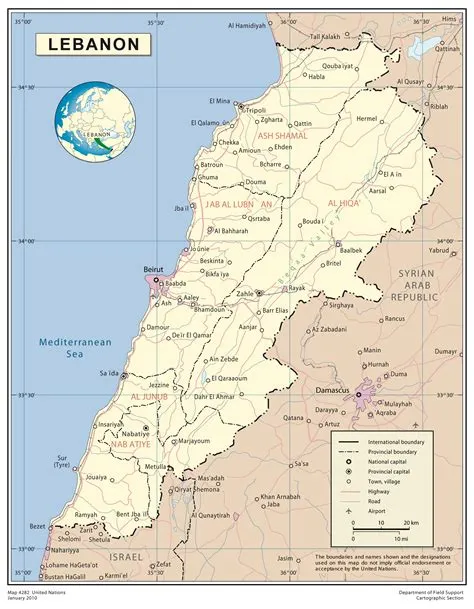
Lebanese cuisine shares much in common with the rest of the eastern Mediterranean, with a cuisine heavily featuring grains, fruits, vegetables, garlic, and olive oil. When thinking about “Mediterranean cuisine,” it’s Lebanese staples like baba ghanouj, hummus, and baklava that spring to mind.
However, Lebanon also brings its own unique elements. Influenced by both Ottoman and French cuisine, as well as its geography, Lebanese cuisine also feature fish, poultry, and lamb. Multiple cheeses are native to Lebanon, and Lebanese cuisine incorporates elements from a broad variety of culinary traditions.
Much of this is a product of Lebanese history. The concept of Lebanon as its own state is a relatively recent phenomenon; while there was an Emirate of Mount Lebanon, and an Ottoman subdivision in the area starting in 1861, what is now Lebanon has historically been ruled by a wide variety of neighbouring empires and states, even well into the 20th century.
The formation of Lebanon as its own state, however, is a product of one of the things that makes Lebanon deeply unique, even throughout its colonial history. Lebanon is deeply diverse, with its population being split more or less in half by Christians and Muslims (with a Druze minority), and the Muslims being split in half as Sunni and Shia. These religious divides lie at the heart of both why Lebanon is a state, and why it is the state that it is.
 An 1862 French map of what is now Lebanon (Source: Wikipedia)
Lebanon is ancient. It is home to one of the oldest continuously inhabited cities in the world, and archaeological evidence suggests humans have lived in the region for at least 14000 years. It is the birthplace of the alphabet you are reading at this moment, and is referenced over and over again in ancient texts as the home of cedars, kings, and sailors. With the birth of Christianity in the 1st century CE, Lebanon became one of its major homes, with its own set of beliefs centred around asceticism, and now known as Maronite Christianity. The Maronite Christians moved into the hills and mountains to escape persecution from the Romans, then the Persians, developing their own unique culture and maintaining it through successive waves of conquest. As the valleys below converted to Islam and adopted Arabic rather than Syriac, the hills remained a home for the Maronites and, eventually, the Druze.
With the arrival of the Ottomans, all three groups in Lebanon expressed their desire for political autonomy, with all three receiving some degree of it. While relations between Muslims, Christians, and Druze, and the Ottomans were never necessarily guaranteed to be peaceful, beyond a few scuffles, these three groups lived in relative harmony. Unlike in the Balkans, there was no particular push for independence until WWI. During WWI, the Ottomans stripped Lebanon of its resources, killing over 100,000 of its residents in a famine. When the Ottoman Empire collapsed, France, then Syria, then France again asserted control over the region. When Lebanon became independent in 1943, it was not through revolution or uprising, but as a consequence of WWII. Fearing that Vichy France would allow Lebanon to be used by Nazi Germany to fight in the Middle East, de Gaulle declared it independent. The state of Lebanon was born.
Initially, Lebanon thrived, with it being seen as a premier vacation destination for Europeans. It was known as the “Switzerland of the East,” Beirut as the “Paris of the East,” with Beirut being a centre of wealth and trade for the region. Part of this was due to Lebanon’s tripartite constitution, specifying an equal division of power between the Sunni, Shia, and Christian populations. Part of this was also due to international support, with the United States occasionally intervening to provide support.
This changed in 1970 with the defeat of the PLO and the influx of more Palestinians into southern Lebanon.
 Lebanese men enjoying a mezze in the 1950s (Source: Wikipedia)
It is difficult to explain the modern history of Lebanon without also explaining the impact of its southern neighbour, Israel. While we have discussed elements of Israeli history in this series already, Israel has and continues to loom large in Lebanon’s modern development.
The arrival of Israeli colonists - and specifically the Nakba - drove tens of thousands of Palestinians from their homes in what had been Palestine. While some of these refugees resettled in Gaza and the West Bank, thousands more poured across the borders of Jordan and Lebanon, resettling in vast refugee camps. Many of these refugees’ descendants continue to live in these refugee camps, denied fundamental rights by the Lebanese government.
The reality of living under constant oppression is that it radicalises people. Disempowerment fuels resistance, with the form that resistance takes being shaped by the particular circumstances of the world around any given peoples. As Israel solidified its occupation of Palestine, it drove more and more Palestinians - both civilians and members of resistance groups - into Lebanon. There, organisations like the PLO continued to resist Israel occupation, clashing with Christian militias, with violence and massacres occurring on both sides, and against both Muslims and Christians. In extremely broad, extremely over-simplified strokes, this violence eventually devolved into the Lebanese Civil War, a brutal 15 year war that destroyed Lebanon and the results of which still shape not only Lebanon, but the region. Hezbollah is a product of the Nakba. Israel’s invasions of Lebanon - and its current attempts to ethnically cleanse southern Lebanon - are self-perpetuating products of the colonisation project that is Israel, with the recognition again that this is a broad and vast over-simplification.
Modern Lebanon is far from a stable place, though its status as shaped by the people both within and around it has not changed. It is a place of vast diversity, whose history and culture are shaped by the worlds around it, and which yet from that diversity, forges an identity all its own. It’s a hint of that vast diversity that comes through in this dish, and in the reminder that Lebanon is a place of beauty and vibrance.