

Vegan Guyanese Chow Mein
Ingredients
1 package chow mein noodles
1 block firm tofu, cubed
2 cups (450g) cabbage, chopped
1 onion, diced
2 cloves garlic, minced
1.5 cups (150g) snow peas
1 red bell pepper, chopped
2 scallions, chopped
1 chili pepper, chopped
2 tbsp sesame oil
4 tbsp ketjap manis
1 tbsp barbecue sauce
3 tbsp soy sauce
1 tsp Chinese five spice
1.5 tsp ginger
1 tsp curry powder
Instructions
- Boil chow mein noodles per package instructions. Set aside.
- In a separate pan, fry the tofu in sesame oil. Douse in soy sauce and ketjap manis, and fry until crispy. Set aside.
- Heat oil in a pan over medium heat. Add onions and garlic and cook until translucent (~3-5 minutes).
- Add the snow peas and bell pepper, and cook until soft (~3-5 minutes).
- Add the chili pepper, scallions, and cabbage. Add 2 tbsp ketjap manis, 1 tbsp barbecue sauce, 1 tbsp sesame oil, 1 tbsp soy sauce, ginger, Chinese five spice, and curry powder. Stir to combine, and cook until the sauce thickens (~3-5 minutes).
- Add the noodles, tofu, and all remaining sauces and spices to the pan. Stir to combine and let simmer for another five minutes to let flavours absorb.
A longer and more detailed description
You know all those sauces and spices you have in your pantry that have been waiting for you to notice them? They’ve been waiting for a recipe like this one, a grand melange of flavours and ingredients.
Cook some noodles. Ignore them. They’ll show up later, but it’s at least helpful to have them ready.
Heat sesame oil in a pan. Use that pan to fry your tofu, liberally dousing it in soy sauce and ketjap manis. If you’re terrible at getting your tofu to brown properly, this is my lifehack for you. If you drown something in soy sauce, it turns brown, guaranteed. Fry your tofu until it’s a level of crispy you’re satisfied with, then ignore that too.
While the tofu is frying and the noodles bubbling, prepare your vegetables. As always, start with onions and garlic, then add in our special guests - bell pepper and snow peas. Cook those until you’re happy, then add all remaining vegetables and a whole heap of sauces and spices. I put amounts in the recipe, but if I’m honest, I just eyeballed and vibed this. I’m not going to pretend I was ultra precise with my ketjap manis here. Add however much of the spices and sauces you like, then maybe add a dash more. For fun. Cook all that until your sauce thickens a bit, then dump in the noodles, tofu, and more sauces and spices. Whatever you think sounds fun, add it in. We’re here to make something tasty, and tasty it shall be. Give it all a mixy mix, then declare it done. Tek in!
Substitutions and suggestions
For the chow mein - I wasn’t expecting this to need a substitution, but sometimes I just have to marvel at what is and is not available here. If you do not have chow mein available, you can substitute for a noodle of your choosing (spaghetti is not a choice). You ideally want a thin noodle, but I use a wide noodle, which was incorrect.
For the ketjap manis and/or barbecue sauce - Both the ketjap manis and barbecue sauce are filling in for browning sauce here, which is a sweet and savoury Caribbean sauce. You can either use actual browning sauce (if you’re fancy) or molasses, syrup, or some combination of any of these options. I personally prefer savoury and really like the sweet/salty/savoury combination of ketjap manis, so I used that with barbecue sauce.
What I change to make it vegan
I subbed out chicken for tofu, though really, you could just make this with vegetables and be just fine.
What to listen to while you make this
I had an amazing time rummaging through Guyanese music. If you’ve ever wanted the weird experience of feeling like you’re listening to a Bollywood soundtrack that wants to be Caribbean, but actually understands what it is to be Caribbean, check out Guyanese pop music. I personally recommend starting with the work of Ravi B, especially Rum is Meh Lover.
A bit more context for this dish
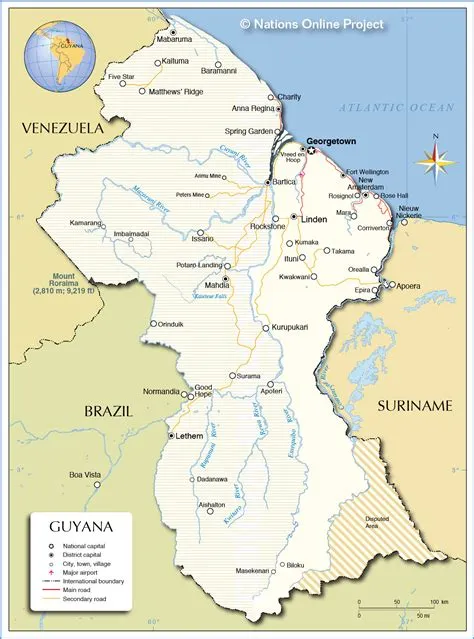
In our exploration of Caribbean countries (of which many are front-loaded in the first few letters of the alphabet, which is fascinating), I’ve talked a lot about how many of their cuisines are the product of a blend of influences, paired with the limited availability of ingredients. All of this becomes true in spades on the northern edge of South America. especially in Suriname and Guyana. Both countries have similar histories shaping their cuisines in similar ways, though each cuisine is also unique.
Guyanese cuisine is shaped by African, Indigenous, British, and Portuguese influences, much like the rest of the Caribbean. Where it differs though, is in what’s suggested by this being the recipe for Guyana. Guyanese cuisine is heavily influenced by Chinese and Indian cuisines, with Indian cuisine being a major influence over what modern Guyanese cuisine is. Make no mistake, though chow mein is usually thought of as a Chinese dish, its path from Guyana to my bowl travels through the Indo-Guyanese population.
 A 1649 map depicting the northern coast of South America, including Guyana, drawn by Jan Jansson, a Dutch cartographer (Source: Ibero-Amerikanischer Institut)
When Christopher Columbus arrived in the Caribbean, he discovered a vibrant and diverse society. In Guyana, the coastal regions were inhabited by the Arawak, a culture of fishermen and gatherers. It is likely they who are the source of the name “Guyana,” the word meaning “land of many waters” in local indigenous languages.
As with much of the rest of the Caribbean, Columbus and subsequent explorers promptly massacred the Arawak, genociding them through a combination of disease, enslavement, displacement, and massacres. However, unlike much of the rest of the Caribbean, Guyana’s interior proved more difficult to conquer, as Columbus faced ferocious resistance from the Caribs. Instead, Guyana largely remained uncolonised until the arrival of the Dutch in 1616.
One note that must be emphasised here, though, is that I frequently talk about the genocides committed by the Spanish in the Caribbean. It is first important to recognise that the European conquest of indigenous peoples of the Caribbean is genocide, particularly in places like Hispaniola. More importantly, however, it bears repeating that, though subjected to genocide, the Arawak were not fully removed from Guyana. Indigenous peoples rarely are. Over 10% of the population of Guyana is Indigenous, and the Arawak in particular have a long history of inter-marriage with each of the colonisers that arrived in Guyana. Indigenous peoples of South America worked with European colonisers throughout the colonisation process, often on their own terms, doing work such as building boats, fishing, or choosing to assimilate into the burgeoning settlements. Indigenous peoples do not at any point vanish from the story of the Caribbean, and especially not in the story of Guyana. Guyanese identity very much includes an Indigenous identity, and that identity is Arawak, Carib, and Guarao.
 Arawak men celebrating International Day of the World's Indigenous Peoples in 2022 (Source: Youtube)
Under Dutch rule (and specifically, the rule of the Dutch West India Company), the Dutch colony of Essequibo grew. Initially using enslaved Indigenous labour to grow tobacco, coffee, and sugar on plantations, these enslaved Indigenous persons quickly either died to diseases or overwork or escaped into the Guyanese interior. By the early 1600s, the Dutch trafficked enslaved African labourers into Guyana. These workers, too, worked under gruelling and brutal conditions, with many enslaved Africans dying within the first year of their arrival.
These conditions led to multiple slave rebellions, including the 1763 Berbice Rebellion. On 23 February, an Akan man trafficked to Guyana from Ghana named Cuffy led 2500 enslaved Africans in a rebellion against the Dutch colonisers. Over the course of 1763, Cuffy led his followers, burning plantation after plantation and forcing the Dutch to retreat. By April 1763, Cuffy wrote to the Dutch commander, proposing a splitting of Guyana, with the revolutionaries receiving a section where they could live freely. The Dutch commander, however, used the peace petition as an opportunity to reach out to surrounding colonies, asking for aid in suppressing the revolution. British troops arrived from across the Caribbean, leading to Cuffy’s defeat and his usurpation and assassination by his second-in-command, Accara. By 1764, the rebellion was over, and Africans remained enslaved in Guyana.
It is, however, worth remembering that suppressing these revolutions was a constant task for European colonisers. Enslaved Africans at no point quietly acquiesced to their fates, instead constantly rebelling against their oppressors in ways both big and small. While the Berbice Rebellion was not as successful as the Haitian Revolution (which we’ll discuss in the next recipe), it was a pivotal moment for Guyana. It remains memorialised, and Cuffy remains a national hero for standing up for enslaved Guyanese. It also demonstrates that colonial oppression does not exist in isolation - it is only through the support of other oppressors that injustice is able to continue.
 Cuffy monument in Georgetown
Guyana remained under Dutch rule until 1796 when, as part of the Napoleonic Wars, the British seized Guyana from the Dutch. However, with the abolition of the slave trade in 1807 and the total emancipation of all enslaved persons in 1838, the new British colonisers faced a problem - there was a shortage of labour in Guyana. While the British tried to attract workers from Portugal and China, these workers quickly decided plantation work was not for them, and instead worked as merchants in Guyana’s rapidly expanding middle class.
Instead, in 1838, the British began a system that would last until 1917. They began bringing indentured workers into Guyana from British colonies in India, promising them work and pay and a free passage home when their tenure was up, then revoking those promises one by one.
Over the course of the next 80 years, nearly 250 000 Indian labourers would move from India (mainly Uttar Pradesh) to Guyana.
 Indian labourers on their journey to Guyana
How voluntarily these workers signed up to go to Guyana - or, indeed, how much they understood what it was they were signing up for - is questionable. A common tactic for recruiters was to hang out near public places and, upon spotting someone who looked unemployed or impoverished, approach them with promises of wealth and work in the New World. In an India wracked by famine and rebellion, the promises of stable employment in a good climate might have sounded appealing, particularly to young men with no other prospects. Tens of thousands of young men signed up to go to Guyana, with a significantly smaller number of women signing up as well.
Upon arrival in Guyana, Indian workers were subjected to conditions that, while not a slavery system, were highly akin to the slavery system. They were bound to a particular plantation, their movements and free time heavily controlled, and their ability to protest their working conditions or lack of wages curtailed by laws that systemically disempowered them. Throughout the late 19th century, however, Indians consistently rebelled and struck against the system, even when it cost them their lives.
What ended the system of indenture, however, was not actions by the British, but rather, actions by an increasingly independent India. In 1910, the Indian government prohibited further indentured emigration, with the practice being fully ended by 1920. For Indians in Guyana and other British colonies across the globe, then, who had seen their ability to return home stripped away, the future was clear. They, too, became part of a diverse Guyanese society. Today, Indo-Guyanese represent 43% of the Guyanese population, their cuisine and traditions an indelible part of what it means to be Guyanese.
 Indo-Guyanese dancers from Berbice, 2019 (Source: Stabroek News)
In making Guyanese chow mein, it’s important to consider the sheer number of stories that have woven together to create the dish. There is suffering in the story of how this food came to be, yes, but also of incredible resilience. Generations of people from across the world, otherwise never encountering one another, came together in South America, together forging something wholly new and unique. The story of Guyana is a human story, and the story of how much we have in common, and how our cultures, when brought together, make something beautiful and delicious.