

Vegan Mbakbaka
Ingredients
1 aubergine, chopped
2 courgettes, chopped
1 onion, diced
2 cups mushrooms, chopped
5 cloves garlic, minced
1/4 cup olives
2 tbsp tomato paste
2 bay leaves
2 tsp turmeric
1 tsp cardamom
1/2 tsp cumin
1/4 tsp ginger
1/4 tsp cloves
1/4 tsp coriander
1/4 tsp nutmeg
2 cups (480ml) vegetable broth
3 cups (720ml) water
2 cans tomato sauce
1 bag pasta (preferably tube shaped)
Instructions
- Heat olive oil over medium heat and add the onions and garlic. Cook until soft.
- Add the remaining vegetables and stir.
- Add all spices, tomato sauce, tomato paste, olives, vegetable broth, and half the water. Stir to mix, then bring to a boil. Lower the heat to a simmer, then let cook for at least 15 minutes.
- After letting the sauce cook, add the pasta and remaining water. Stir to combine, then let cook for another fifteen minutes.
A longer and more detailed description
Last week’s recipe was a pasta recipe, and so it seems fun to compare that philosophy of pasta with this week’s. Mbakbaka has a very different origin than Liberian spaghetti, but it is no less tasty.
Start by making your sauce. Your sauce is - as might be expected - many vegetables and some tomato sauce, so do that. Add your onions and garlic into heated oil, then vegetables and spices, then dump it all in tomato sauce and vegetable broth. Let it simmer while you wander off to do something else with your time.
Except! You’re hungry! Come back to your sauce and cook your pasta directly in the sauce. This will infuse the pasta with many fun flavours. Cover and let this cook for another fifteen minutes, and then you’re ready to go! !بالهنا والشفا
Substitutions and suggestions
Adding chili peppers - This is ordinarily made with chili peppers, and I highly recommend adding one of two. To do this, add the pepper whole while the sauce is cooking, then remove it before serving.
For the aubergine, courgette, and mushrooms - Feel free to use whatever vegetables you’d like here. I used these because they have a nice amount of body and flavour to them, but if they’re not your thing, you can use whatever you’d like.
For the spice mixture - Mbakbaka is made with a Libyan spice mix called “bzaar.” If you’re able to find this, by all means use it, because it’s delicious. If, however, you’re not, I’ve tried to approximate its earthy flavours as best I can.
For the pasta - I used macaroni here, but feel free to use whatever pasta you’d like (preferably tubular).
What I changed to make it vegan
This is ordinarily made with beef or lamb. I substituted in vegetables, and I think it’s quite excellent.
What to listen to while you make this
While the official and most commonly spoken language in Libya is Arabic, there is a significant Amazight minority speaking Tamazight and related languages. These languages were heavily suppressed under Gaddafi, and so, when he was overthrown during the 2011 revolution, there was a resurgence and celebration of Amazight culture and language. I highly recommend giving a listen to the work of Dania ben Sassi, who sings about the struggle for Amazight rights and identity.
A bit more context for this dish
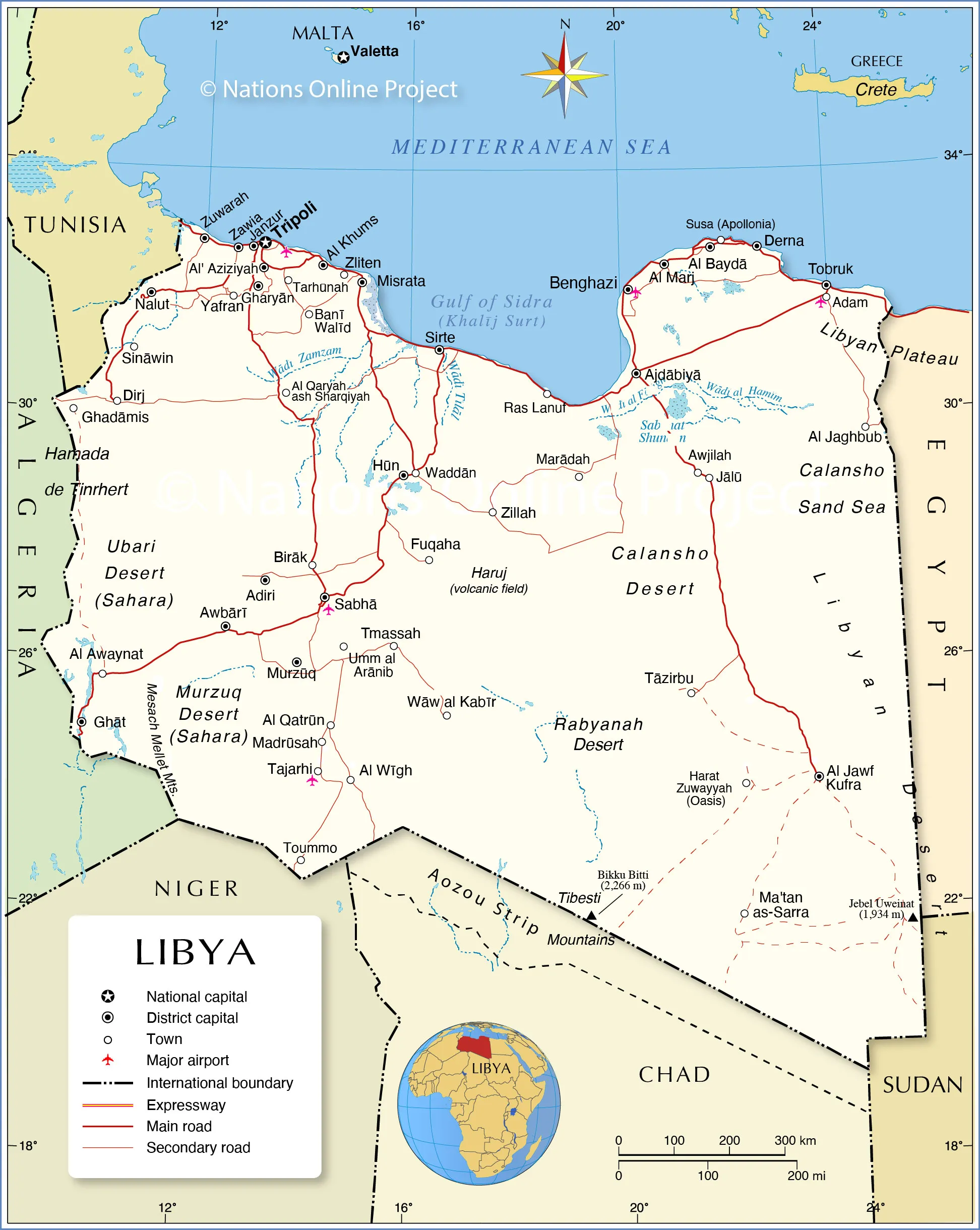
Libyan cuisine is a highly diverse cuisine, informed both by its geography - with the culinary traditions of the south being more like traditional Arab and Amazight cuisines - and by its long, long history. Libya has been inhabited for at least 10,000 years, with the name “Libya” deriving from ancient Egyptian records of the area and its Amazigh inhabitants. It has been colonised by Greece, Persia, Rome, the Umayyads, the Abassids, the Ottomans, and the Italians.
Its cuisine reflects this massive diversity, with Ottoman, Arab, Mediterranean, and Italian dishes all blended together. Pasta is very common in Libyan cuisine, with mbakbaka representing just one of many pasta-based dishes. Mbakbaka specifically traces its origins to the Italian occupation of Libya from 1911 to 1943, during which Italians made up 12% of the Libyan population. It derives its name from the sound of the pasta cooking, but combines Arab cooking techniques and spices with Italian ingredients. It’s wildly popular across Libya, and is in many ways representative of what modern Libyan cuisine is. It’s flexible, varied, and quite delicious, and an absolute joy to discover.
Part of how I write these entries is to bounce ideas of what I want to write off my partner as we eat the dish I made. I tell him about what I’ve learned about the country, what I found interesting about the dish, and what I’d like to learn more about. I see what from that conversation piques both of our interests, and then write more about that.
This week, we had a friend over for dinner, and as we sat together, enjoying our mbakbaka, with me trying to explain the roots of Italian colonial interest in Libya and what differentiated it from other forms of European colonialism at the time, he chimed in with his thoughts.
“Did you know Gaddafi was a prolific writer of short stories?” he said, and then proceeded to do a dramatic reading of Suicide of the Astronaut. To which my partner responded, wanting to know more facts about Gaddafi.
So here we are. By popular demand, this post is about Muammar Gaddafi.
 Italians and Turks at the Sook el Turk in Tripoli in the 1930s, something I will not be writing about because Josh wants you to know that Gaddafi once set up a tent in Donald Trump's back yard (Source: Wikipedia)
Initially, following the end of Italian and Allied occupation of Libya, the Libyan national assembly voted to establish a monarchy, choosing Sayid Idris as the new king of Libya. However, Libya was also a desperately impoverished country which, despite the discovery of vast oil reserves in 1959, remained so as what wealth the kingdom did have rapidly became concentrated in the hands of the elite. In 1969, while King Idris was in Greece, the military launched a coup to overthrow him, led by one Muammar Gaddafi. The coup was successful, and its organisers declared that Libya was now the Libyan Arab Republic, to be led by committee. However, by 1973, the idea of the committee had fallen by the wayside, with Libya firmly ruled - at least in theory - by Gaddafi. In practice, however, Gaddafi was more interested in foreign affairs, leaving domestic affairs to a long string of prime ministers.
That investment in foreign affairs gave Libya outsize influence over world politics. It was one of the primary instigators of the 1973 oil crisis, urging OPEC to blockade exports to the US in response to the US’ funding of Israel. Libya also sponsored Palestinian resistance movements, and saw itself as one of the bastions of pan-Arabism. By 1977, Gaddafi had consolidated power and was remaking Libyan society in his own image.
 A 16th century French wood engraving depicting the 1551 siege of Tripoli, which saw the capture of Tripoli by the Ottomans, but which I will also not be talking about because Josh wants you to know that Gaddafi had a life-size poster of Jake Gyllenhaal on his bedroom wall
Like many dictators, Gaddafi cultivated a cult of personality, including making study of his political theory as written in the Green Book mandatory. He implemented a cultural revolution, enforcing a version of sharia, though rather than defaulting to the judgement of actual Islamic jurists, declared himself the primary jurist, with his interpretation of the Qur’an being the only valid one. His cultural revolution, like all cultural revolutions, necessarily included the brutal repression of those who opposed him, with 10-20% of the population being part of a secret police force that informed on their neighbours. It was brutal and tyrannical, with no political freedoms. Those who spoke out against Gaddafi found themselves in danger, even after they left the country, with Gaddafi in 1982, saying: “It is the Libyan people’s responsibility to liquidate such scums who are distorting Libya’s image abroad.” Gaddafi was also horrifically oppressive towards non-Arab Libyans, including Amazight and Jews, killing or expelling them.
And yet, Libya also became a symbol of freedom and revolution for many across the world. It funded revolutionary (or terrorist, depending on your position) movements throughout the world, under the auspices that standing up to western imperialism was a global fight that could only be won through solidarity. When hijackers hijacked planes, it was Libya they wanted to go to, knowing that Libya would provide sanctuary to anyone perceived as fighting back against western oppression. When Gaddafi was overthrown and executed in 2011, there were many who saw his death as a loss, despite the atrocities he’d committed against the people of Libya.
 The Sook el Bezerken in Tripoli, which I will also not be talking about because Josh wanted you know that, during Gaddafi's rule, Libya had the world's only unicolour flag. It was green.
Gaddafi is a fascinating figure. He was, for a time, a dominating figure in certain spheres of world politics, the boogeyman dragged out by western leaders to explain the PLO, Lockerbie, and the Berlin Discotheque. When there needed to be an explanation of some horror somewhere in the world, it was easy to point to Gaddafi as a mad demon, funding terrorism out of some innate insanity and desire to see the west burn.
In both writing this and thinking about how to write this, I’ve been thinking about the joy with which my partner and my friend engaged with Gaddafi facts, these quirks and tidbits about an admittedly deeply weird man. I’ve been thinking about how everything that exists in the common view of Gaddafi has been broken down into these pieces of trivia, swapped around like playground rumours, to be tittered over, then filed away to be brought out again at the next duel among the slides and junglegym.
Gaddafi isn’t the only dictator broken down like this. We have a tendency to do it with a lot of them. Idi Amin called himself the king of Scotland because of his hatred of the British. Pol Pot’s favourite character was Mickey Mouse, and he wore a Mickey Mouse wristwatch for most of his rule. Fidel Castro tried to breed super cows, but didn’t succeed. Stalin loved American westerns. On and on, with each dictator having their own weird quirks that creep into every conversation, particularly the non-western ones. Gaddafi is part of a trend, not unique, though his quirks were perhaps more voluminous and more visible.
I’ve been thinking about why this is, why dictators get broken down into not their deeds, but these facts about them, these quirks that, while not solely who they are, aren’t relevant to the millions of dead at their hands. What matters about Gaddafi and his life isn’t his fashion sense and his Amazonian guard, but what Libya became under his rule, the experience of the Libyans, and why, exactly, he became a boogeyman.
In reading about dictators, particularly in Africa, there is a common theme. Most of them, I would argue, didn’t start as brutal repressors. If you’ll recall the posts about Guinea and Ghana, their respective dictators started as optimists and revolutionaries, with their rise to power leading to dictatorship. However, paired with that was the very real and constant threat of interference in their rule by very powerful external forces, such as the French or Americans. In the case of Guinea-Bissau, those threats came to fruition, with Cabral being assassinated, likely at the behest of the Portuguese in revenge for losing their colony.
I don’t know enough about Gaddafi to describe him as being an optimist, forced by the pressures of the world into madness. There is, however, a comfort in breaking political figures down into their quirks rather than grappling with the realities of their beliefs and actions. There is a comfort in looking at someone like Gaddafi and characterising him by his insanity rather than examining why he funded revolutionary movements, and why his death was mourned in some parts of the world. There is a comfort in not looking too closely at the nuances of power, and instead, reducing everything down to quirks. There is a comfort in looking at horror and finding something to giggle about, even if that giggle buries the lived horrors of millions.
There is comfort in believing the people who do these things are not like us, that this potential madness doesn’t lie dormant in everyone, that they are not like us because they are Weird and we are not, that we, put under the same pressure and given the same power, would not have our own madness.
None of this is, of course, an endorsement of Gaddafi or anything he did. Rather, it’s an invitation to examine why, when I brought up Libya and its history of colonisation and struggle against it and the uniqueness of the Libyan story of decolonisation and pan-Africanism and pan-Arabism, the conversation shifted to fun facts about Gaddafi. It is also not a condemnation of anyone - Gaddafi was a weird, weird man, and staring at weirdness reassures us of our own sanity. It is, however, asking that people be considered for who they were and are, particularly when they are from places beyond the west, and when what the west knows of them is only the weirdness.
Gaddafi was a dictator and guilty of horrific crimes against humanity. He also funded opposition movements to western imperialism and colonialism, sometimes through terrorism and sometimes not. These are the facts that are important to remember, because it is these that are have shaped the world into what it is.
It’s useful to remove the comforting veneer of weirdness and ask why and how someone committed the horrors that they did.