

Vegan Nasi Kerabu
Ingredients
For the rice:
1.5 rice cooker cup medium grain rice
3 rice cooker cups water
1 tbsp lime juice
1 tbsp lemon juice
For the tofu:
1 block firm tofu, pressed and drained and cut into finger-sized slabs
1/2 cup (65g) flour
1/4 cup (35g) panko
1 tbsp cornstarch
1 tbsp nutritional yeast
1 tsp paprika
Salt
Pepper
For the salad:
Beansprouts
Cucumber
Nori
Mint leaves
For the kuah tumis:
4 chili peppers
5 shallots, sliced into chunks
2 cloves garlic
1/3 can coconut milk
1 tsp lemon juice
2 tsp lime juice
1 tsp miso
Instructions
- Set rice cooking in the rice cooker, adding lemon and lime juice to the water.
- Prepare the breaded tofu. Heat oil in a frying pan over medium heat. Combine all ingredients except tofu in a bowl. Roll the tofu in the breading until completely coated, then fry until brown on all sides (~5 minutes/side). Set aside.
- While the tofu is frying, prepare the kuah tumis. Add the chilis, shallots, garlic, and ginger to a blender and blend into a paste. Add to a pan over medium heat and heat for 3-4 minutes. Add all remaining ingredients, and stir until thick (~3-4 minutes). Set aside.
- Assemble your nasi kerabu! Place a piece of nori on a plate. Place the rice at the centre, and surround with tofu and salad. Top the rice with kuah tumis.
A longer and more detailed description
Sometimes I have chill recipes, where you put things in a pot and then ignore it for a while. Other times, I have a recipe where you are running around a kitchen, trying to balance a wide variety of things, and knowing that things are going wrong every step of the way.
This is the second kind. It’ll be okay. You’ve done this before. You can do it again.
Let’s start with the easy part that can’t possibly go wrong. Put rice in a rice cooker. Add a few dabs of lemon juice and lime juice, then set it cooking. See? Easy.
Next, let’s complicate things a bit. Heat a pan with oil over medium heat. While it’s heating, combine lots of flour-adjacent things in a bowl, sifting them together to get them nice and mixed. Once they’re mixed, roll your tofu slabs around in the breading until they’re nice and covered, then pop them into the oil to fry. You’ll want them to be nice and bready on all sides, so keep an eye on them.
Alternatively, you can cook something else while letting them do their thing. In a blender, combine chilis, shallots, garlic, and ginger, and blend that until it has ceased to be recognisable. Add this to a pot, cook briefly, then add coconut milk, more citrus, and a bit of miso. Mix all of this together on medium heat until thick, then remember your tofu and have a small panic. Don’t worry. The burned pieces are just your cooking snacks.
Once everything is done, assemble your plate! Nasi kerabu is fundamentally a salad (but a good one), and so this means everything has to look nice on the plate. Put a piece of nori on your plate as a base. Add the rice to the centre, then add the tofu and salad bits around it. Top the rice with kuah tumis and mix it all together in a pile of deliciousness. Selamat menjamu selera!
Substitutions and suggestions
Let me preface this section by saying I know my nasi kerabu is missing a few elements. Ordinarily, this is served with fish crackers, an egg, and various types of beans. It’s here that I would like to emphasise that I live on an island in the South Pacific, and I am doing the very best with what I have. To that end, feel free to serve this with both crackers and edamame (the best substitute I could think of for the Malaysian short beans), neither of which I could find at the grocery store.
For the rice - I used short grain rices here. One of the defining features of nasi kerabu is its blue rice, but you might have noticed the rice in my picture is not blue. The blue colour comes from the fact that the rice is cooked with bluepea flowers, which add a slight flavour, but mostly add colour. If you can find them, add them. Otherwise, if you would like your rice to be blue, add some blue food colouring. If you’re able to find lemongrass and lime leaves, cook those with your rice as well. For my part, I added a local leaf - kawakawa - as my lemongrass substitute, but recognised it was unlikely to be found outside New Zealand. Use lemon juice if you have neither kawakawa nor lemongrass.
For the salad - This is ordinarily served with mint, short beans, and long beans. My suggestions would be edamame, bean sprouts, and cucumber, along with mint. However, I found a kiwano at the store that worked really, really well, but which, again, you’re unlikely to find. If you do find it, use that - it’s well worth the adventure. Alternatively, make whatever salad brings you joy, but if you dunk it in ranch sauce, there is no saving your soul.
For the tofu - This is standing in for fish, so feel free to bring your own fishy substitute. I like tofu, personally.
For the crackers - Nasi kerabu ordinarily includes fish crackers. I did not, both because fish crackers, and because I couldn’t find crackers that seemed like a nice substitute. I left them out, but feel free to add them if they’re more your thing.
For the nori - Part of the purpose of the nori is to add a bit of a seafood flavour to make up for all the missing fish. Ordinarily, however, nasi kerabu is served on a banana leaf. You can also just put it on a plate, but I really liked the effect the nori had on the dish as a whole.
What I changed to make it vegan
Like much of Malay cuisine, nasi kerabu is loaded with fish. I removed all the fish, which required some creativity in some parts. Fish is fundamental to the budu in the kuah termis, for example, but I substituted the budu entirely with miso. Similarly, the tofu is filling in for fish, and I just cut the fish flakes and fish crackers entirely. Did I actually make nasi kerabu? My Malaysian friend seem sceptical, but I thought it was tasty, so you be the judge.
What to listen to while you make this
M. Nasir is absolutely excellent.
A bit more context for this dish
When I think about the places I’ve been and the food I’ve had there, one of the questions that always pops up in my mind is the question of which place has the best food. The answer for me is simple - Austin, TX. In addition to being the home of incredible tacos, it just has such a wealth and variety of foods that it never gets boring. Paired with that is the fact that so much of it is vegan friendly. I could go anywhere and be reasonably confident that, unless it was obviously branded as a place that was for meat, I could find something tasty to eat.
A close second is Malaysia.
 Squid and egg skewers for sale at the Malacca night market (Source: I took this picture)
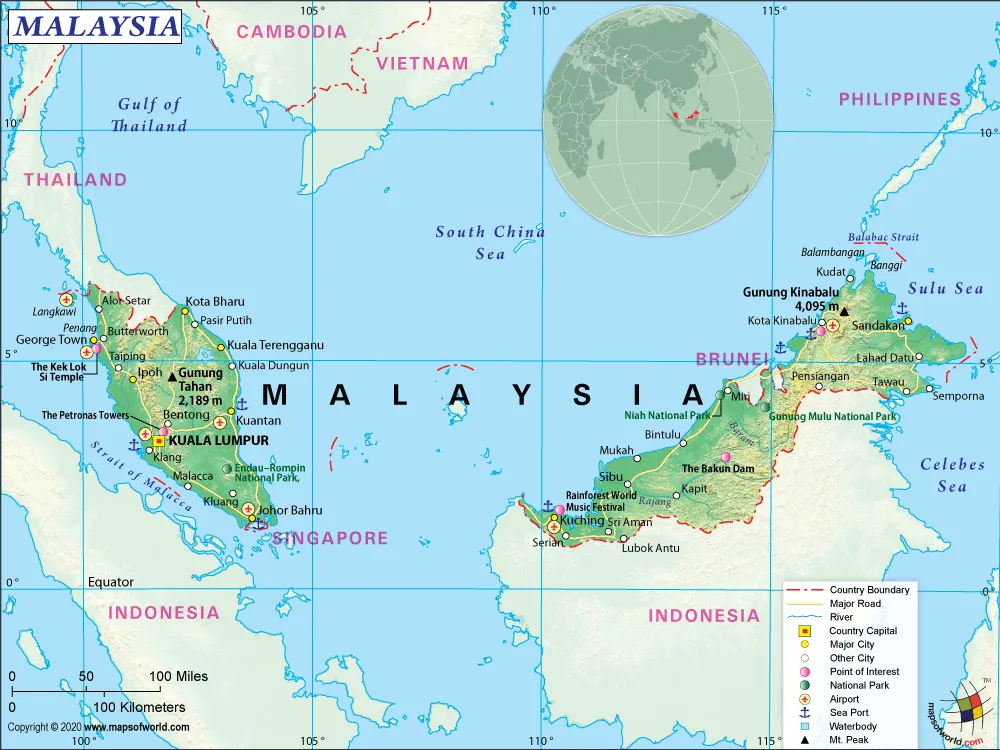
Malaysia is a widely diverse place with a long and complex history, and its cuisine reflects this. Long a collection of trading and warring states, modern Malaysia formed in the wake of WWII, with the experience of being under Japanese occupation serving as a catalyst for independence. Since then, what constitutes “Malaysia” has fluctuated - with Singapore being kicked out/leaving Malaysia in 1963 - but the idea of it has persisted. Malaysia is a federation of disparate states being brought together under one, unifying banner.
That it is so wildly diverse is reflected in its cuisine. While there are some elements that are shared across Malaysia - rice is foundational across both the peninsula and Borneo - what food is served varies across geography and cultural and religious groups.
Malaysia’s population is divided into roughly three groups. The majority of the population is ethnic Malays, with ethnic Chinese and ethnic Indians constituting most of the rest of the population. Each group has their own history, and with it, their own culinary traditions, with each of these traditions blending in with those surrounding it to create something utterly unique. In Malacca, for instance, Chinese cuisine met Malay cooking traditions to create what is now known as nyonya cuisine. Indian curries have been adapted into both Chinese and Malay cooking traditions, as has chapati and roti. Spices from Arab traders added flavour, and ingredients from European traders added variety and new combination. The chili pepper is fundamental to Malaysian cuisine, though it finds its origins in the Americas. Malaysia’s tropical climate means fruit is available all year, leading to a cuisine that heavily features it.
Paired with this, though, is the fact that Malaysia is massively diverse in what foods it has available. Much like last week’s cuisine, Malaysia is a megadiverse country. Part of that diversity is reflected in the sheer variety of available ingredients.
Including the clitoria.
 This crab threatened me. I did nothing wrong. (Source: Me)
Before we go any further, and just to dispel any confusion you might have, “clitoria” is the actual genus name of this flower. I am not making it up. I am not goofing off. Here is a picture of it:
 This flower has other names, but they're less fun, so I'm not going to use them.
Clitoria are native to southeast Asia, where they are commonly used both as ingredients in their own right, and as food colourants. When you encounter blue food in southeast Asia, it’s because of the clitoria. They can be made into teas, fried as chips, and act as both insecticides and medicinal plants. They are very popular additives, grow everywhere, and make a very excellent tea.
They are one of many, many plants native to Malaysia that have become an indelible part of multiple cuisines. As each group of people arrived in Malaysia, they adopted the local flora into their own diets, learning what each one did and understanding how to make the most of it. Including the one shaped like a clitoris that turns things blue.
This, I think, is part of what makes Malaysian cuisine such a delight. It isn’t enough for it to be delicious on its own. Nasi kerabu is one of many, many delicious dishes, and I can’t even begin to scratch the surface of what all Malaysia has to offer. What makes it fantastic, though, is how well it blends so many people and influences together. While modern Malaysia is not a perfectly blended society, its culinary landscape is very much one of each group informing each other group about food, what’s tasty, and how to cook those tasty things.
Including the clitoria.