

Vegan Saltfish Buljol
Ingredients
Breaded Tofu
1 block firm tofu, drained and pressed
1/2 cup (65g) flour
1/4 cup (35g) panko
1 tbsp cornstarch
1 tbsp nutritional yeast
1 tsp paprika
1 tsp ras el hanout
Salt and pepper
Oil for frying
Buljol
1 onion, diced
2 cloves garlic, minced
1 leek, chopped
1 red bell pepper, cut into strips
1 serrano pepper
2 tomatillos
1 cup spinach, roughly chopped
1 tomato, diced
1/2 cucumber, diced
1 avocado, diced
Salt and pepper
Instructions
- Start by preparing your tofu "saltfish." Slice the tofu into rectangular chunks approximately the same size as fish fingers.
- Mix your flour, panko, cornstarch, nutritional yeast, and spices in a mixing bowl.
- Roll each tofu chunk in the breading mix until it is thoroughly coated on all sides. If the coating isn't sticking, you can dip the tofu in a bit of soy sauce or water to moisten it.
- Fry the tofu on medium heat, rotating it until each side is crispy and brown (3-5 minutes/side, for a total frying time of 12-20 minutes).
- While the tofu is frying, prepare your stew. Dice and mince your onions and garlic, then add them to a pan on medium heat.
- Chop your leek and red bell pepper, and add them to the onions and garlic.
- After two minutes, add your tomatillos and hot peppers.
- After another minute, add your spinach. Cook until the spinach reduces (~3 minutes). Add the salt and pepper, and mix to combine.
- Once the spinach is reduced, add the avocado and tomato. Cook for another two minutes.
- Add the cucumber. Lower the heat to low, and cook until the tofu is finished.
A longer and more detailed description
Make sure you open up your tofu to drain and press it. Personally, I squished it under my law books, which was very effective, because the tofu was bone dry and complaining about renters’ rights by the time I got around to actually breading it. Consider carefully what lessons you would like your tofu to take from what you use to squish it, and maybe give it a happy book instead of one it will complain about.
It had every right to complain, though, as, after draining and pressing it, you’ll be slicing it into strips approximately the same height and width as fish fingers. Which, as an aside, is just an odd name for a food. Fish don’t have fingers. The fingers are clearly referring to people fingers, which they are also approximately the same height and width as. We craft the flesh of fish into the dimensions of human fingers, with the intention that they be eaten by those same human fingers, all while assigning ownership of those fingers back to the fish who never possessed and would likely prefer not to possess them in the first place. It’s a bizarre nomenclature.
Anyway, make yourself some tofu fingers. Slice your weepy tofu, roll it around in your flour and panko mixture, and slap it down to fry in a pan of oil.
Please do not literally slap it down. Please don’t do that.
The tofu should be crispy and brown on each side, so make sure to rotate it as it cooks. I found that each side needed about 3-5 minutes to properly brown, which is plenty of time to prepare the stew.
While the tofu is frying, dice and mince your onions and garlic, and add them to a second pan over medium heat. Remember to check on your tofu and rotate it as you cook the stew, but if you forget to do so, I accept no liability. The tofu agrees that I am not responsibility for others’ dysfunctional tofus.
While the onion and garlic are merrily sauteeing in their oil bath, chop the bell pepper and leek. Add them in with the onions and garlic, then start in on the serranos and tomatillos like some mad vegetable axe murderer. Once those are chopped, add them in with the other vegetables as well. Chop your spinach, grabbing two fistfuls, and happily chopping it with your knife. Add your chopped spinach in with the other vegetables, adding salt and pepper and giving everything a good mix. The stew should be delightfully colourful and already evocative of the tropical domain you are likely not currently in. But we can dream, right? We can dream.
Once the spinach is reduced (~3-4 minutes), we’ll be adding what I like to think of as “cool” ingredients. These are the ingredients that don’t want to cook too long, because you still want them to have a bit of a cool punch when bitten into. Add your tomatoes and avocado, and then, finally, half a cucumber. You could add the whole cucumber if you want - I’m not the cucumber police - but that seemed like a bit too much cucumber for me when I was looking at the pan. Besides, now I have the wonderful challenge of figuring out what to do with half a cucumber, which is always a good time.
Mix everything again, and reduce the heat. Check on your tofu, which you absolutely have not forgotten about while cooking the stew. Depending on how your tofu is feeling, it may or may not be done at about the same time as the stew, but feel free to negotiate with it. Rotate it to crisp up any areas that aren’t delightfully crunchy, but try not to let it burn. Once the tofu is done, the stew is also done. Serve the tofu on the side. Enjoy!
Substitutions and suggestions
For the tofu: In this recipe, tofu is subbing in for salted cod. In most of the versions of this dish that I found, the cod is usually boiled, then shredded and mixed in with the vegetables; however, I found that to be less interesting than having something crispy on the side. If, however, you want a more authentic buljol, I recommend using shredded jackfruit instead of breaded tofu.
For the tofu breading: Everything can be more or less substituted in the breading, depending on your particular preferences. Don’t want flour? Great, use chickpea flour or something similarly gluten free! Not a fan of panko? You can sub in any crunchy, texture thing, from more flour to cornflakes. Don’t have nutritional yeast? Leave it out. Don’t have a ready supply of ras el hanout for some bizarre reason? Replace it with whatever flavour you have that brings you joy. You’re basically making a fish stick substitute. You can do whatever you want with it.
For the buljol vegetables as a whole: I’ll get into the history and development of this dish in more detail below, but the vegetables here are extremely flexible. This is meant to be made with whatever you have lying around, so if you have, say, half a cucumber in your fridge that you don’t really know what to do with, feel free to chuck it in. The vegetables I’ve added here are ones that I thought would make a nice combination of flavours and textures, but you are not beholden to any of them. Feel free to sub in and out to your heart’s content.
For the serrano: You do not have to add a serrano. You can add any hot pepper. Or no hot pepper, if you’re no fun.
For the spinach: I added spinach because I like spinach and had quite a bit left over from other projects. You can substitute in cabbage, kale, or any leafy green.
For the tomatillos: You do no have to add tomatillos. I did because I had them lying around and thought they’d be fun. They were fun. I have no regrets.
What I changed to make it vegan
As you might expect from the name, saltfish buljol is a fish and vegetable stew. Fish is decidedly not vegan, so I decided to find a good vegan substitute. The original dish has the fish shredded and mixed in with the vegetables, but I thought it would be more interesting to try to capture a bit more of a crunchy fish, just to give a variety of textures. This led to the addition of the breaded tofu, which, while in no way authentic to the original recipe, did indeed add a lovely texture and crunch.
A bit more context for this dish
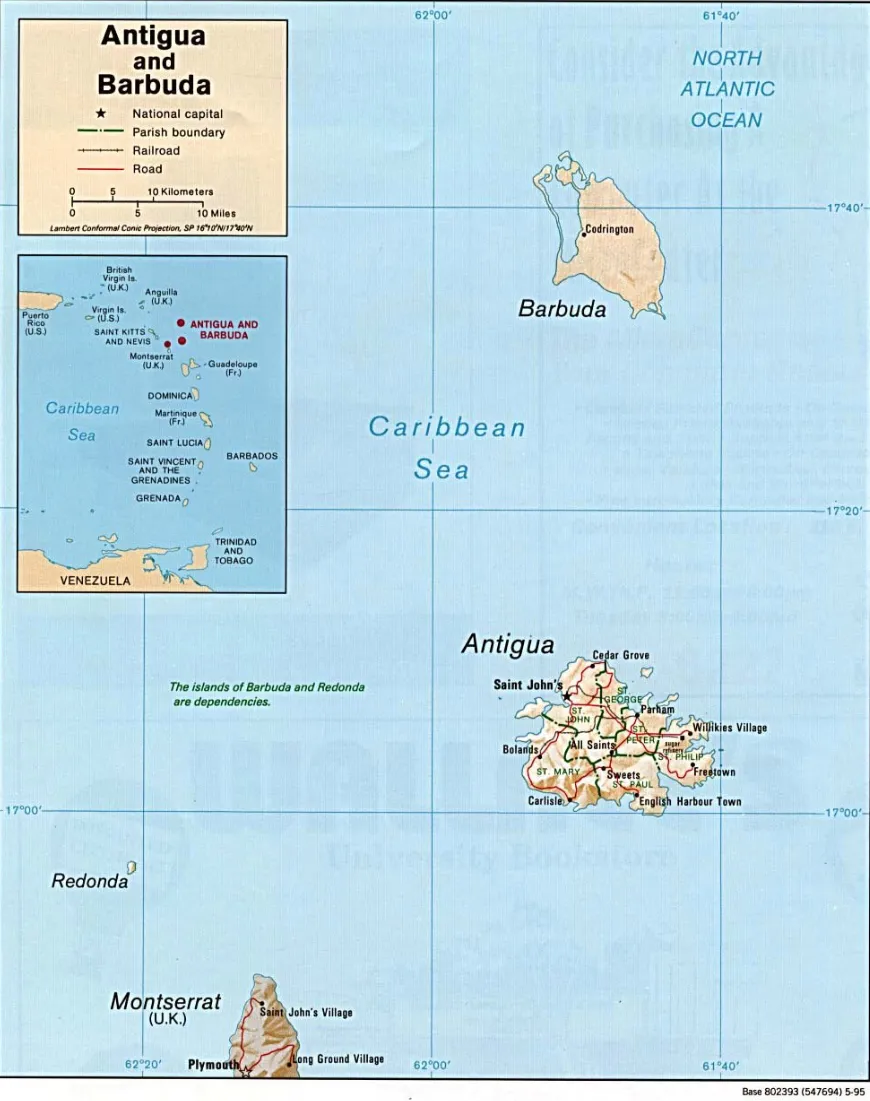
I’ll go ahead and reveal the elephant in the room. This dish is known more as a Trinidadian dish than an Antiguan one. Indeed, I suspect the recipe as written is more or less recognisable to a Trinidadian audience, save for what I changed to make it vegan, and there may be angry comments just waiting to tell me I’ve made a terrible mistake in labelling this an Antiguan food rather than a Trinidadian one.
First off, I apologise for any offence I may have caused either my Antiguan or Trinidadian readership by making this as my Antiguan recipe. I went on a journey that started with ducana, trying in several different stores to find coconut, wondering what paired with ducana, finding buljol, and deciding that sounded tastier anyway.
Which, I stand by that statement. I don’t even like coconut. I don’t know what I’m doing here.
My point, though, is that while the dish originated in Trinidad and is a hallmark of Trinidadian cuisine, it is also part of Antiguan cuisine, and part of the narrative of Caribbean cuisine more generally. Much like with borani banjan, there exists a family of foods with a common origin and common narrative, but where the individual stories reveal some of the nuance and meaning behind the food and its association with a particular people or group.
I believe my decision to say that saltfish buljol is also an Antiguan recipe is valid. Feel free to flame me in the comments.
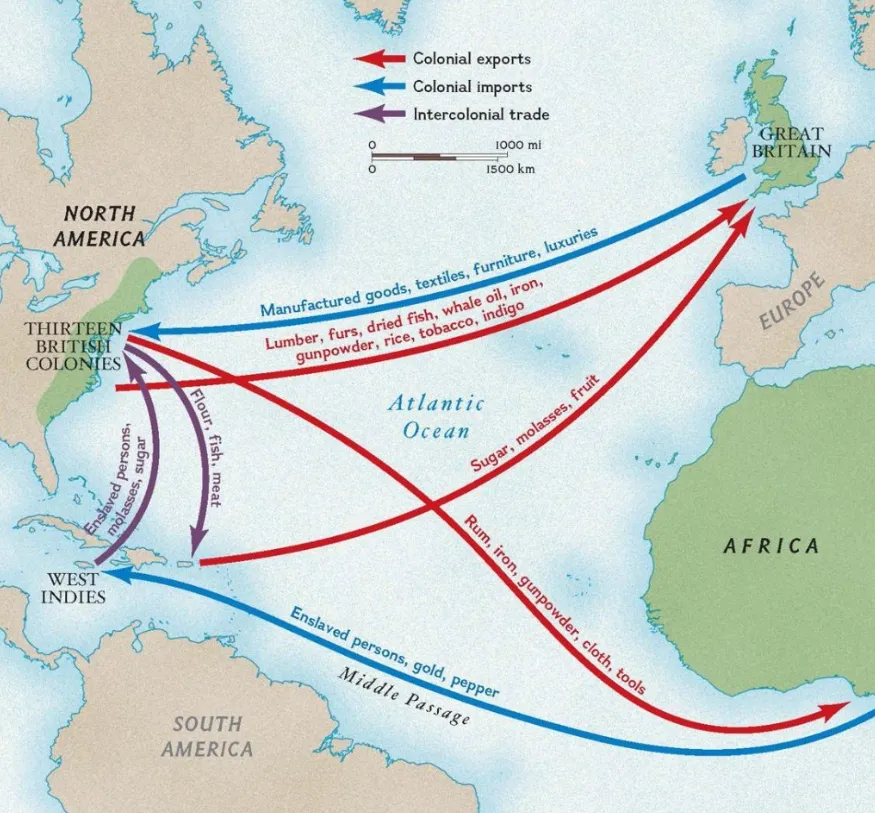
There is a reason, though, for the commonality of recipes in the Caribbean, and of the recognisability of a recipe like saltfish buljol more specifically. I like to include maps in these posts to illustrate the changing nature of human geography, but maps can serve as more than just geographical guidance. They can serve as a way to tell a story, and to illustrate how a place came to be in addition to what it actually is. The history of saltfish buljol requires not only knowing where Antigua and Barbuda is, but how it came to be there, and more importantly, how its people came to be there.
To fully contextualise saltfish buljol, we need this map:
CW: This history of Antigua and Barbuda contains discussions of slavery, suicide, and torture.
The earliest settlements that we have records of on Antigua date back to 3100 BCE. Arawak-speaking peoples lived on the island until, at some point, they were invaded by neighbouring Kalinago, or Caribs. When Christopher Columbus arrived in the Caribbean in 1492 - and at Antigua specifically in 1493 - it was the Kalinago he encountered, and the Kalinago for whom the Caribbean Sea is named. It was also the Kalinago who died in droves to European diseases such as smallpox, malnutrition, and enslavement by Columbus and other Spaniards. By the time the British arrived in Antigua in 1632, most of the population had died. For British landowners seeking a new source of labour, the dilemma of how to source cheap labour had a clear and obvious answer - importing that labour from West Africa in the form of enslaved Africans.
We have an academic understanding of the Trans-Atlantic slave trade, of what’s shown in the map of molasses and rum and slaves. We have an understanding of how enslaved Africans were the backbone of the economies of European colonies in South America and the Caribbean, and of the southern United States. We know about the torture many of these enslaved people endured, and of the universal and fundamental horror of being seen as property rather than as a human being. This is, after all, the crucible in which modern capitalism was born, with horrific exploitation at its core, and profiting off the misery of others as a fundamental component. What we perhaps don’t think about is the individual stories and experiences of these enslaved persons, of who they were, what their lives looked like, and what it was to be an enslaved person in Antigua, Barbuda, or the rest of the Caribbean. We choose knowledge over understanding, and justifiably so.
It would perhaps be easy for the narrative of slavery in Antigua and Barbados to be dehumanising, to reduce the institution and the myriad of narratives down to numbers and horror stories. That would, however, be untrue, and silence the voices of the tens of thousands who lived and died on the plantations on those islands. Much like with kizaka, the story of saltfish buljol is a story of humans finding their way in a new and terrifying world.
By the early 17th century, enslaved Africans outnumbered British plantation owners 100 to 1. The British, however, maintained control through a complex system of uplifting the people they saw as working hard, and playing different ethnic groups against one another. Those who were seen as working hard could be rewarded with better food, better accommodation, or baptism, prompting enslaved persons to believe that, if they worked hard, they could improve their lot. Enslaved persons learned a variety of skills and took on a wide range of jobs, creating societies and classes within that society, empowering some, and disempowering others. Many took pride in their work, seeing it as an expression of themselves. Many also maintained their African heritage, playing west African games and continuing their traditions. However, these class dynamics, combined with the diversity of ethnic groups within slave societies, created internal tension and conflict, making enslaved people less likely to organise and rebel.
For some enslaved people, the prospect of later rewards was enough of an incentive to continue working and hoping for freedom. For others, however, the horror of their existence was overwhelming. Some responded with suicide, while others tried to rebel. In 1728, an enslaved Akan from what is now Ghana named Prince Klaas began plotting a massive rebellion of all enslaved Antiguans. By 1736, his plan was ready, but, at the last moment, was betrayed. Prince Klaas and his fellow rebels were arrested and tortured to death, with Prince Klaas being broken on the wheel. Instead of an African-ruled kingdom in the Caribbean, Africans in Antigua and Barbuda remained enslaved until the abolition of slavery in the British Empire in 1833. However, even after the dissolution of slavery as an institution, workers continued to work for meagre wages and in abysmal conditions on Antiguan sugar plantations until the 1960s.
This is not a narrative unique to Antigua and Barbuda. 91% of the population of Antigua and Barbuda is of African descent, due to the sheer number of enslaved Africans brought over as part of the Trans-Atlantic slave trade. That history remains reflected in the languages, the traditions, and the cuisine of the Caribbean. Much of Caribbean cuisine is a fusion, both of European and Caribbean ingredients, as well as the cooking traditions of enslaved Africans and later Indians. Its ingredients reflect what was available to these populations.
Saltfish buljol originated in Trinidad and Tobago as part of French settlement of the island in the late 18th century. However, because of the readily accessible nature of its ingredients, it quickly spread through the rest of the Caribbean. Its name originates from the French for “burnt mouth,” and migrated through various creoles to become “buljol.”
The key ingredient of saltfish buljol is, well, salty fish. In its original incarnation, the dish calls for a salted cod that has been rinsed repeatedly to get as much salt off as possible. This is then mixed with a variety of vegetables, and served with crunchy bread. For workers on plantations throughout the history of the Caribbean, these ingredients reflect the reality of what was available. Salted fish was a staple ingredient in the rations provided to enslaved persons, as were root vegetables. These could be combined with what could be grown locally to create a stew.
The history of saltfish buljol, then, is inextricable from the history of slavery in the Caribbean. It is a direct product of slavery, created by enslaved people from what they had available and blended into the narrative of their lives on these islands. Much like kizaka, the idea of blending ingredients into a stew wasn’t new. What was new was the circumstances under which it was done, and the ingredients available.
There is a horror to the history of saltfish buljol that isn’t reflected when you sit down to eat it. What you find when you observe it on your plate is something colourful and flavourful, something that, in taste and texture, at least, reflects what you’d expect of a Caribbean recipe. It is sweet and spicy, juicy and warm, lovely in every bite. It is also the legacy of centuries of slavery, oppression, and horror, of people making the best of where they are and the situation they’re trapped in. It is a deeply human food, reflecting, as many of these dishes do, a story of resilience and fusion in a dark crucible. That saltfish buljol is now part of the story of the Caribbean and of Antigua and Barbuda is a testament to human resilience. It is the story of making something wonderful out of horror, and of remembering humanity when others seek to strip it away.
It is creating our own stories, as the world tries to tell us we have none. We always have our own stories, and we always have our own joys.