

Vegan Trei Ngeat Ovlek
Ingredients
4 king oyster mushrooms, cut into strips
1 mango, diced
2 cups watermelon, diced
1 small package seaweed
1 shallot, cut into rings
Oil
Rice
For the marinade:
4 tbsp ketjap manis
2 tbsp soy sauce
1/2 tbsp rice wine vinegar
2 tbsp sesame oil
1 tsp pureed garlic
1 tsp ginger
1 tsp pureed lemongrass
1 tsp paprika
1 tsp sesame seeds
Salt
Instructions
-
Start by making rice. When adding the rice to the cooker, crumble one sheet of seaweed in for every cup of rice made.
-
Make the marinade. Combine ketjap manis, soy sauce, vinegar, sesame oil, garlic, ginger, lemongrass, paprika, sesame seeds, and salt in a bowl. Mix until everything is blended.
-
Add the strips of mushroom into the marinade, ensuring everything is covered. Let soak while continuing with the rest of the preparation.
-
Heat oil over medium-high heat. Add the shallots to the oil and cook until browned and slightly crispy (~4-5 minutes).
-
Lower the heat to medium, then add the watermelon, mango, and three sheets of crumbled seaweed to the pan. Cook until warmed, but not browning (3-4 minutes).
-
While the fruit is cooking, heat a second pan over medium-high heat. Fry the mushrooms until juicy, flipping halfway through (2-3 minutes/side).
-
Combine the mushrooms, fruit, and shallots, and serve over rice.
A longer and more detailed description
Today’s recipe is a bit more complicated than what I usually make, in that there are multiple steps, and those steps are not just “toss it in the soup.” I think it’s a general trend, that when I’m subbing in something for fish, life gets complicated. Just to give an idea of what I mean when I say “complicated,” here are our ingredients:
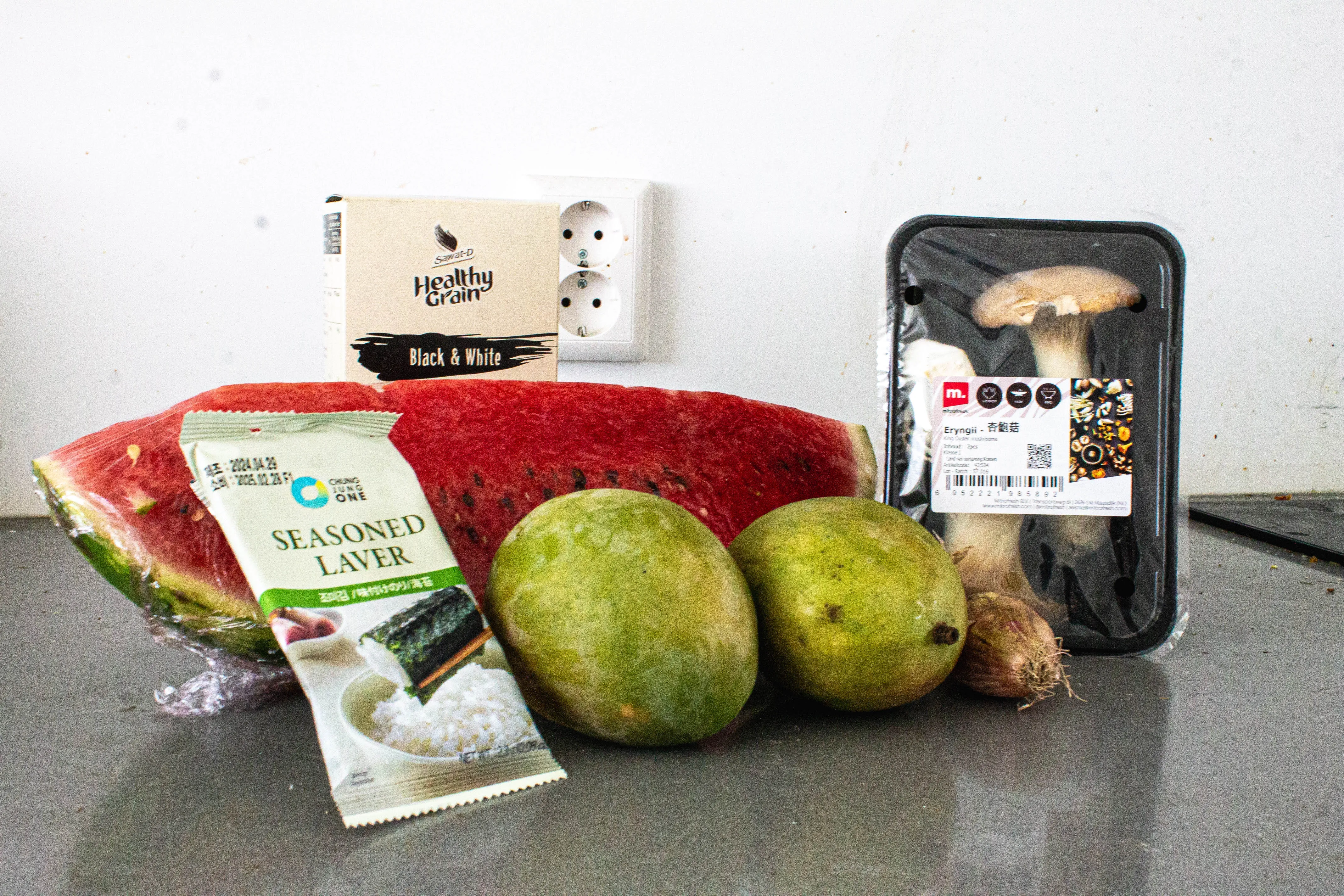
Just a wide variety of things we don’t usually use, right? But it’ll be fun, and definitely different, I promise.
Let’s start by making some rice. Add your rice to your rice cooker (which, after all our talks, you definitely have), but rather than stopping there, we’re going to spice things up a bit. For every cup of rice you’re making, crumble a sheet of seaweed in with it. It won’t be much seaweed, but it’ll be a fun amount. Set your bedazzled rice cooking, and move on to your meal proper.
It’s time to make a lovely marinade. Combine all your marinade ingredients in a bowl (or takeaway container), mixing until everything is nice and blended. Slice your oyster mushrooms into strips. I recommend doing this by beheading them (calling them foul bourgeoise pig dogs before you do so is optional, but encouraged), slicing the stems into strips, then quartering their heads. Toss the mushrooms into the marinade, and give everything a lovely mix to make sure it all gets covered. Leave the mushrooms there to think about what they’ve done while you move on to grinning gleefully over fruit, wielding your knife high.
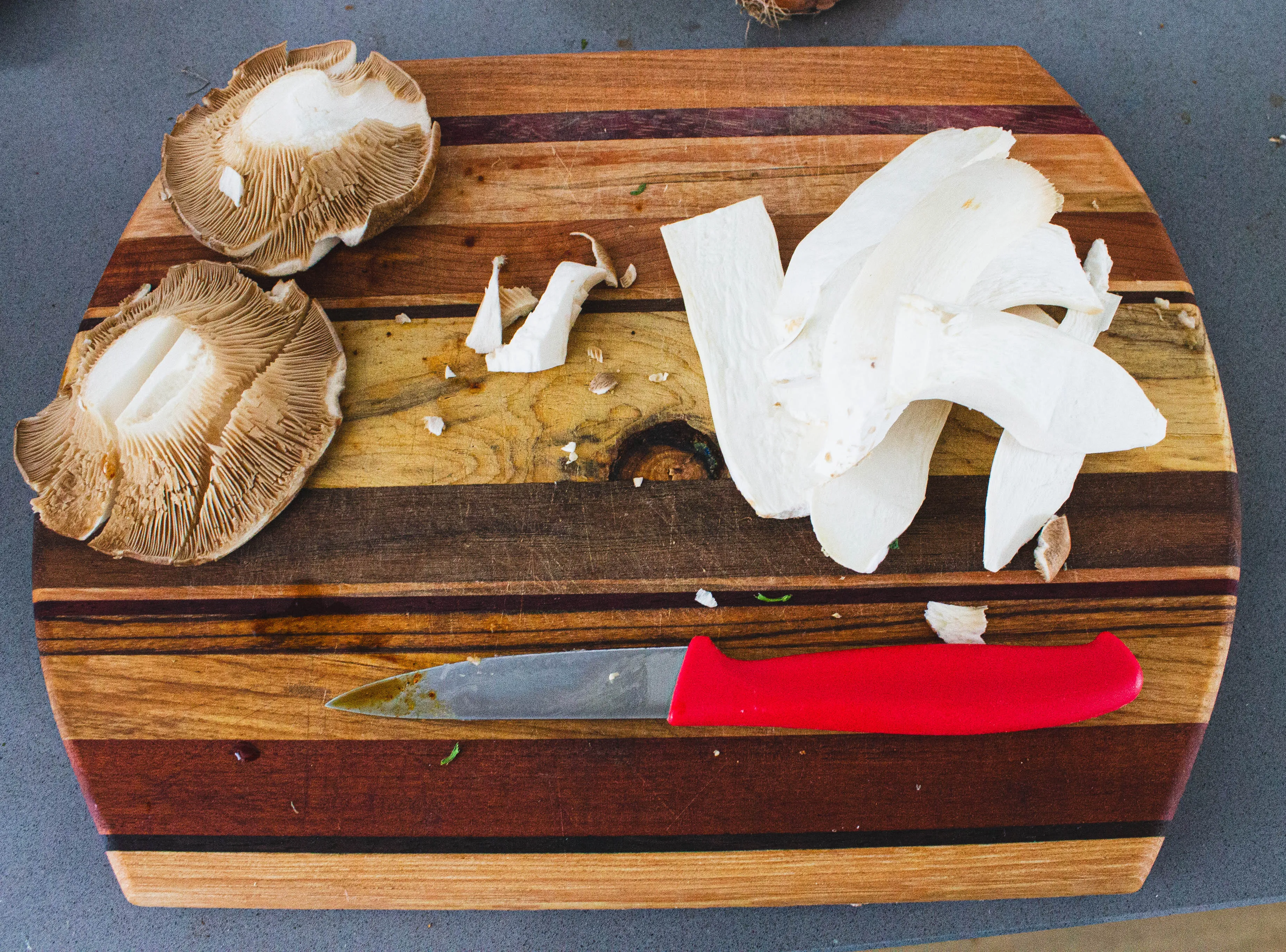
First, though, that shallot. I ended up accidentally making a birista with my shallot, which was lovely, even if it wasn’t what I intended, but you are under no obligation to do so. Heat your oil on medium-high heat, and add your shallot to it. Keep an eye on it, and fish it out when it’s done to the point you want it to be done. I recommend not raw, but if that’s your thing, you do you. At the very least, I recommend the shallot at least be considering the possibility of turning brown before you fish it out.
Once your shallots are at a point that they bring you joy, turn the heat down to medium and add your fruits and some more seaweed. The fruit should end up being warm, but not cooked, per se. That said, the flavour mellows out the longer you cook them, so if you do want mellower fruit, cook them longer. This really is an off-the-cuff recipe with a lot of room for you to express yourself through the magic of tropical fruit. Enjoy it. Be free.
While the fruit is cooking (or even the shallot, look at you, you adventurous chef, you), heat a second pan over medium-high heat and add the mushrooms. These are going to get fried until they’re nice and cooked. They can be nice and crispy, though I found they were better when they remained a bit soft. The best description I have for how cooked they should be is “got caught lying about something, but it wasn’t anything too major, but not a nothing thing either.” So roughly five to six minutes, flipping partway through.
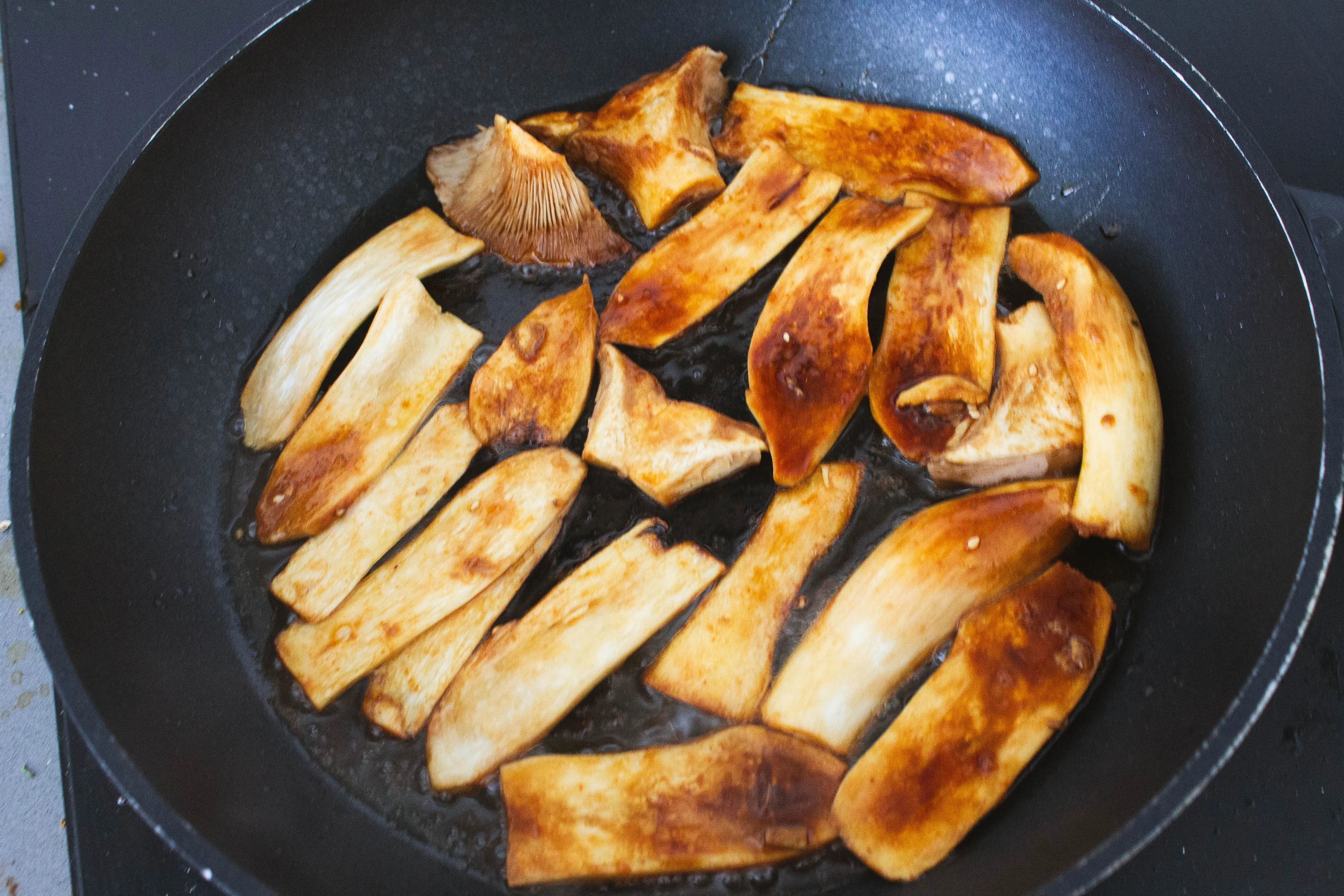
Once everything is cooked to your satisfaction, combine the fruit and mushrooms, and serve with the rice. អញ្ជើញពិសាឲ្យបានឆ្ងាញ់!
Substitutions and suggestions
For the mushrooms: I suggest king oyster mushrooms here because they slice nicely into strips and do a good job absorbing marinades. In general, though, any neutral flavoured mushroom should be fine here. Portobellos may even do nicely, but I didn’t try them.
For the ketjap manis: Ketjap manis is a sweet Indonesian soy sauce. This can be substituted for equal parts soy sauce and sugar.
For the pureed garlic and lemongrass: You can use regular, finely minced garlic. I just happened to have the pureed stuff and was looking for an excuse to use it. For the lemongrass, you can also use the fresh stuff, or, if the issue is acquiring lemongrass in the first place, just add some lemon juice or lemon zest.
For the seaweed: You don’t technically need to add seaweed, I suppose. Here, it’s adding a nice extra base of salt and savoury. You could leave this out and add more salt, but the seaweed really is lovely and is pulling its weight here.
For the rice: Your rice doesn’t have to be purple, but you’ll feel fancier if it is. Malys Angkor is a native Cambodian rice, so if you can find and make that, you’ll get all the fancy points.
For the fruit: In its original form, the fruit is served on the side rather than being cooked in. You could still do this, but I preferred the fruit warm and mixed in.
What I changed to make it vegan
“Trei ngeat” is a Khmer dried and salted fish, so, as you might imagine, that got changed. The mushrooms are subbing in for the fish here, and the marinade for some of that salty fish flavour. However, I also wanted to make a sweet marinade, so I abandoned the idea of making an entirely accurate reproduction pretty quickly, instead creating a nice sweet marinade for the mushrooms. I think it worked, and I am prepared to be banned from Cambodia for what I’ve done.
A brief context for this dish
CW: This post discusses genocide.
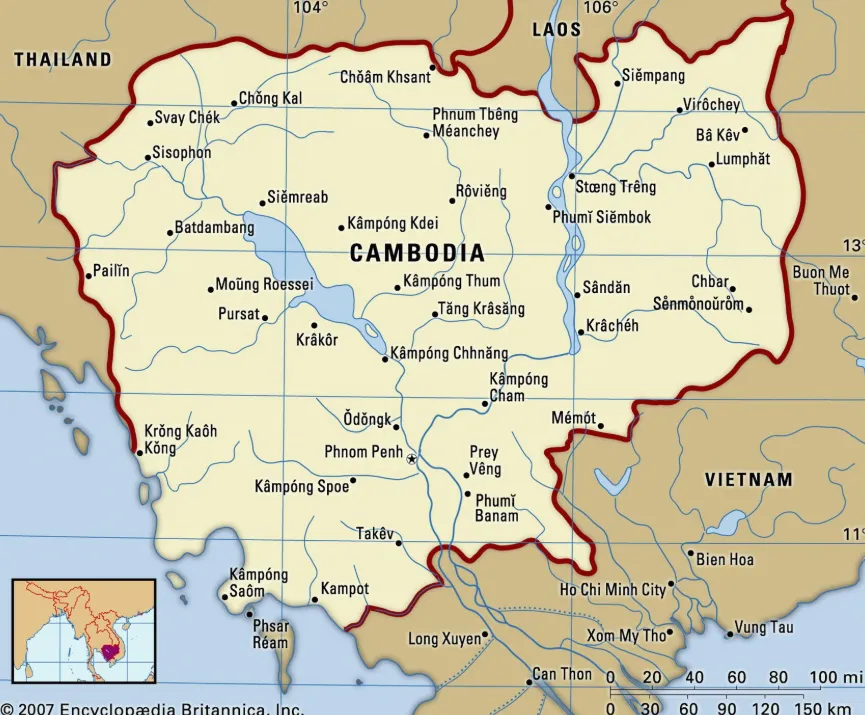
Cambodian cuisine is interesting because, in the grand corpus of southeast Asian cuisines, it’s the one that seems to be mentioned least, while still having a fairly large impact on the region. In doing research for this recipe and post, I looked up the nearest Cambodian restaurant so I could glance at their menu and see what modern Cambodian cuisine looks like. There’s one restaurant in this country, and they don’t post their menu online, so that was a bust. Instead, I dug into what makes Cambodian cuisine - and Khmer cuisine specifically - unique, and why, despite being absolutely delicious, it is relatively unknown.
To understand that context, though, we must, as per usual, have a little history lesson.
Khmer cuisine is an ancient cuisine, with archaeological evidence suggesting the Khmer were settled in Cambodia by the 1st century CE. This early cuisine featured some of the elements that are familiar in today’s recipe - fish, rice, and fruit. By the 2nd century CE, Indian merchants had arrived, and elements of Indian cuisine, such as curries and lemongrass, were being incorporated into Khmer cuisine.
However, Khmer cuisine grew and developed largely alongside the Khmer Empire, incorporating elements from newly acquired territory and trade routes. Ingredients such as onions, gourds, lotus, and pepper became available, and were rapidly worked into the deeply complex culinary world of the Khmer court. These complex dishes also made their way into the cuisines of the people the Khmer conquered, with Vietnamese, Lao, and Thai cuisines being shaped by Khmer traditions.
 A temple relief in Angkor Thom depicting royal chefs (Source: Wikipedia)
To be clear, the complexity of Khmer cuisine wasn’t limited solely to the ruling classes. While Khmer cuisine was divided into classes - royal, elite, and rural - rural cuisine still showed a complexity of ingredients and techniques almost unique in the world. The dish we made today, for example, is an example of a rural dish. While it may not be the most complex dish in existence, it still has a medley of unique flavours incomparable to anything else.
When the Khmer Empire collapsed in the 15th century, the cuisine remained, a legacy of the empire. It continued to be influenced by its neighbours and trade routes, particularly the Portuguese, Vietnamese, Chinese, and French. Elements such as tomatoes, pineapples, baguettes, and butter were introduced and used to create entirely new dishes. In the wake of WWII and Cambodian independence, French cooking and cuisine were seen as the height of good taste, with wealthy households hiring French chefs. However, this hiring of French chefs relegated traditional Khmer cuisine to a lesser status. The high status cuisine was French and European, and it was that cuisine that needed to be taught and passed on. The centuries old traditions of Khmer cuisine began to be lost, replaced by colonial ideals.
 Phnom Penh central market in 1953 (Source: southeastasiaglobe.com)
Tradition was interrupted, first by colonialism, and then by annihilation.
The Cambodian Genocide is one of the textbook genocides raised as an example of what a genocide is and what it does to a people. From 1975 to 1979, the Khmer Rouge under Pol Pot murdered between 1.5 and 2 million people, roughly a quarter of Cambodia’s population at the time. In addition to destroying human lives, the Khmer Rouge destroyed Cambodian society, targeting the educated, religious, and urban-dwellers for imprisonment, torture, and execution. Even decades later, the legacy of the genocide continues to massively impact people’s outcomes, with a continued gap in education attainment. This genocide extended to the legacy of the Khmer Empire as well, with traditional dance, art, and music being considered “feudal relics” that needed to be done away with in the new world. Both the lives of the people and the culture they had known were destroyed, replaced with a madman’s idea of a brave new world.
 The Khmer Rouge enter Phnom Penh on 17 April, 1975 (Source: Getty images)
It’s the impact on cuisine we’re interested in today, though. As part of his Maha Lout Ploh, Pol Pot attempted to remake Cambodian society into a self-sufficient, agrarian utopia. People were forced into labouring on collectivist farms, then having the fruits of that labour confiscated and redistributed to the Khmer Rouge elites. Cooking one’s own food became illegal. People were given porridge to eat, and forced to forage for spiders, insects, and reptiles to survive. Tens of thousands starved.
The end of the Khmer Rouge and the genocide brought some degree of security to Cambodians, but did not undo the damage the Khmer Rouge had done. In addition to the long term impacts on education and population dynamics, Cambodian culture - and cuisine in particular - had suffered, being brought to the brink of extinction. Food was no longer something to delight in or to take joy in preparing, but a matter of survival. The complex and rich Khmer dishes were replaced with simple ones, and the art of Khmer cuisine was nearly lost, another victim of the genocide.
The fact that I am sitting here, writing all this after having made my version of a Khmer dish tells you that it wasn’t lost, though. It has survived, and is undergoing a revival.
While the genocide destroyed much of Cambodia’s culture and social structure, its impact was lessened in the deeply rural areas and inaccessible areas of the country. It’s there that Khmer cuisine survived, and where food archaeologists and chefs like Ros Rotanak and Ly San have reconstructed the lost cuisine of pre-genocide Cambodia. It’s thanks to their efforts, and the efforts of many others that recipes have been revived, reconstructed, and brought back to the markets of Phnom Penh. Their work is incredible, and has ensured that this ancient cuisine continues to delight into the 21st century and beyond.
 Ros Rotanak (Source: Markus Bell for Asia Nikkei)
This is also not to say that Cambodian cuisine is solely a reconstruction of the past. Much like with all the cuisines and ingredients that have influence Cambodian cuisine throughout the centuries, the legacy of the genocide has also left its mark. Dishes like a-ping are now a staple of the street food scene in places like Skuon. These are dishes that would not exist without the scars of the genocide, but which now represent a new idea of what food and cuisine are in Cambodia.
The story of Khmer cuisine is one of resilience. This rich and wonderful cuisine was brought to the verge of extinction, and survived. While mine is not the most accurate depiction of this fantastic cuisine, it fits within the story of Khmer cuisine. I have taken the past and incorporated something new to create something unique. That is the story of Cambodian cuisine.