

Vegan Vary Amin'Anana
Ingredients
1 bunch spinach, chopped (use your judgement about how much you like spinach)
1 onion, diced
1 tomato, diced
5 cloves garlic, minced
2 tbsp ginger
1 cup rice
2 cups water
Salt
Pepper
Instructions
-
Heat oil in a pot over medium heat. Add the onion, tomato, garlic, and ginger, and saute until soft (~3-4 minutes).
-
Add the spinach and cook for another minute.
-
Add the rice and water and bring to a boil. Lower the heat to medium, cover, and let cook for 25-30 minutes.
A longer and more detailed description
I’m going to let you in on a little secret on this one. This recipe contains a secret, bonus recipe that is the real star of the show. The dish itself is fine - solid B-tier on my rankings - but the bonus recipe? It’s an absolute gem.
Let’s start by making the vary amin’anana. Heat oil, pitch in vegetables, cook until they’re edible, and add your spinach. Bish bash bosh, do the same thing we always do. Add in the rice and water, cover it, and let it cook. The main spice here is ginger (though you can add salt and pepper to your heart’s content) because Malagasy cuisine is defined by ginger, so feel free to be as liberal with it as you’d like.
Once the rice is soft, serve the vary amin’anana, making sure to empty the pot. You may be left with some sticky, burnt bits of rice. It’s those that are going to be the basis of the real winner here.
Boil some water in a kettle or separate pot (or in a mug in the microwave if you’re an absolute monster). Add it to the now-empty-except-for-rice pot and let it sit for a few minutes. After a few minutes, pour it into a mug, straining out the rice. You now have an absolutely fantastic rice tea. Mazotoa homana!
Substitutions and suggestions
For the spinach - Feel free to substitute any leafy green of your choice in here. I just like spinach the most.
For the ginger - Also feel free to use fresh ginger instead of powdered. It’s probably tastier, but I find it’s not always worth the headache.
What I changed to make it vegan
Vary amin’anana is generally served with meat of some sort (such as zebu), but it doesn’t have to be. I chose not to. What a rebel I am.
What to listen to while you make this
Madagascar has a wide range of absolutely fascinating music that I highly encourage you to explore on your own. However, I particularly enjoyed Rossy.
A bit more context for this dish
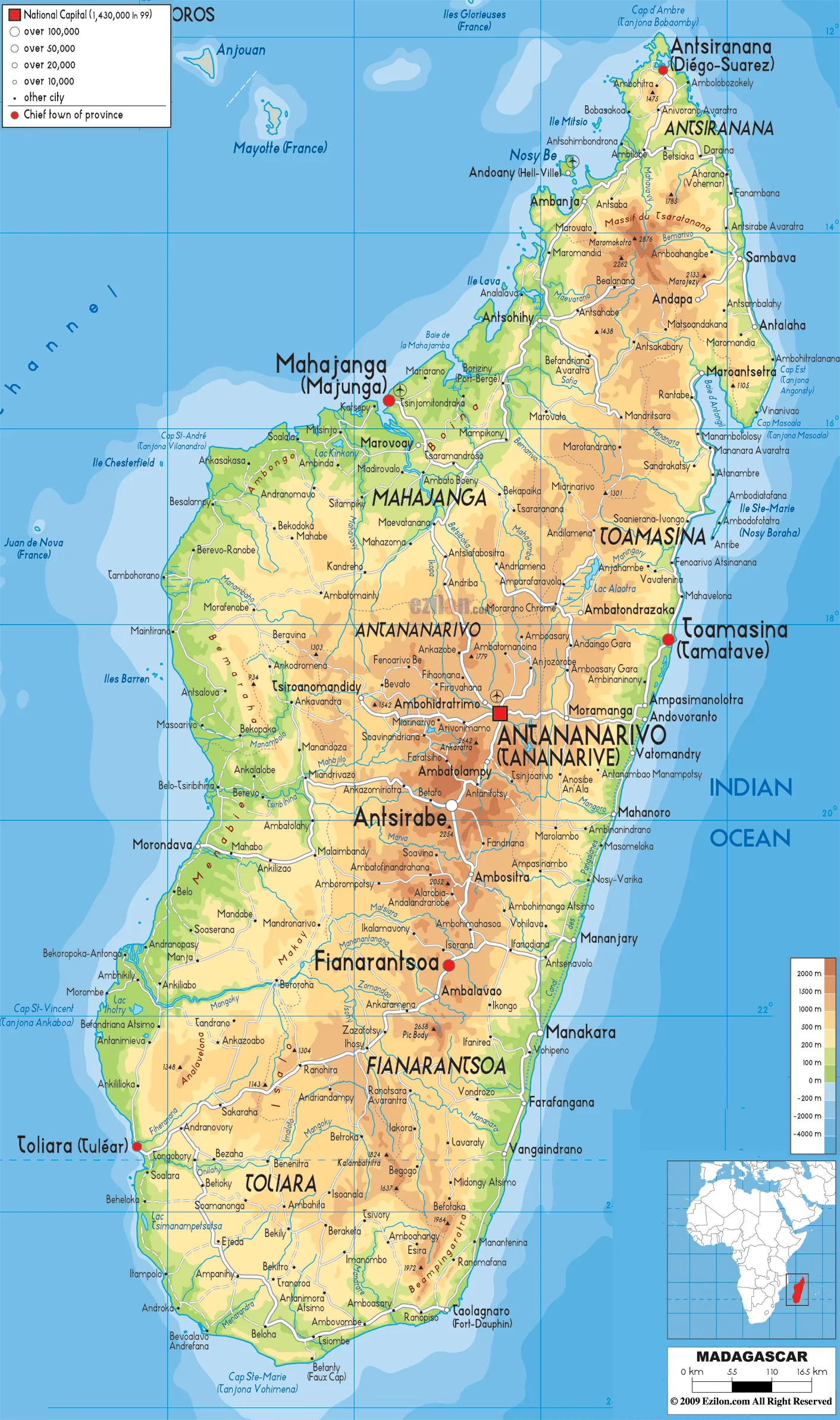
Malagasy cuisine is based on a widely diverse set of influences. The Malagasy people themselves are the descendants of both Austronesian seafarers and Bantu peoples of southeast Africa, and their cuisine reflects this. It has a heavy basis in rice - the word for “to eat” in Malagasy translates literally as “to eat rice” - with the rice then being the basis for a topping, or laoka. This traditional cuisine has been influenced by multiple waves of settlement and colonialism, including Chinese, Arab, French, and other European cuisines to create a truly diverse culinary body.
Part of why Madagascar is as diverse as it is is because of its history of settlement. While it’s not known exactly when Madagascar was settled, it is likely one of the last major landmasses to be reached by humans, with the earliest definitive proof of human settlement dating back to 490 CE. These first people arrived on outrigger canoes from Borneo, with more waves of people arriving over the course of centuries.
 An outrigger canoe (Source: Wikipedia)
When these people arrived, they found an island unlike anywhere else on Earth. Because of its long isolation, life on Madagascar had evolved in a different direction from that of mainland Africa. 90% of the species living in Madagascar are endemic and can be found nowhere else on Earth. It is massively diverse, and what greeted these early arrivals was an island rich with plants, animals, and life that had been thriving for millennia.
The arrival of humans always changes things. Within a few centuries, the island’s megafauna had gone extinct from hunting. By 2026, 90% of Madagascar’s forests have vanished, and nearly all of its endemic species are threatened with extinction. Humans, in their desire to make Madagascar their home, have ensured its inability to be a home for the species that had long thrived there.
 A silky sifaka, a critically endangered species of lemur (Source: Dr. Erik Patel via the Lemur Conservation Foundation)
Madagascar being stripped of its forests isn’t just a modern phenomenon - though, to be clear, like with many forests around the world, deforestation has accelerated as demand for exotic wood has increased. The first settlers of Madagascar arrived from Indonesia and brought with them their traditions of tavy. Tavy is a slash-and-burn technique that not only clears forests, but is associated with health, prosperity, and ancestors. Through tavy, the Malagasy can connect with their past, their heritage, and the spiritualism of the world around them.
In theory, this practice shouldn’t be cataclysmic. When limited to a small subset of forest, burning undergrowth and clearing forests can be beneficial for certain species. The problem in Madagascar, however, is that the human population is not limited, and the economic benefits of clearing the forest substantial. As the human population increased, the forest decreased, to the point that 90% of it has disappeared, taking with it the habitats of the non-human population.
 Artist's rendering of an elephant bird, a species of bird endemic to Madagascar that had been driven to extinction by the 17th century (Source: Brianj996b via Wikipedia)
There are many Indigenous and traditional practices that are harmful to the environment and to endangered species. Whaling, for instance, is largely banned, save for exceptions made for Indigenous peoples (and Norway and Japan, for less well-meaning reasons) as a means by which to preserve these threatened cultures. Striking that balance between environmental preservation and Indigenous peoples’ rights is a difficult balance with very few easy answers.
While the source of Madagascar’s deforestation isn’t limited to tavy, it is worth considering how tavy informs how people consider the forests. When their source of meat relies on grasslands, and when their sense of identity is based around being able to tame the forest, how does that shape views on what the forest and its creatures are?
This is not to say the Malagasy have no sense of conservationism, far from it. Multiple governments have invested in conservation, expanding protected land, and teaching what the consequences of bushmeat are. However, the drivers of deforestation and environmental destruction in Madagascar aren’t solely from the people of Madagascar. It’s the economic incentives inherent in harvesting exotic wood for shipment to China, or farming vanilla, or mining nickel and cobalt for the ever-expanding green economy.
There comes a point where it’s easy to blame Indigenous practice, because doing so allows for shifting the blame off global capitalism and who pays the price for endless consumption.
 Panther chameleon (Source: Wikipedia)
The story of Madagascar is not unique. Islands throughout the world have been devastated by the arrival of humanity, and Madagascar is no exception. The question is no longer one of undoing the past, but of understanding what can be done to preserve what’s left. It means making a choice and understanding who suffers from our desire to have things, to grow, to expand, to explore.
There is no such thing as an action without consequence. The decision to settle Madagascar was not made with malice, nor is the continued desire to grow economically one made with a desire to wipe out the lemurs. However, we must recognise the consequences of what we do, and the reality that there is no growth without cost.
What matters more - vanilla, or a species that will never be seen again?