

Vegan Khinkali with Pkhali
Ingredients
For the khinkali:
2 cups (250g) flour
1/2 cup (120ml) water
1 onion, diced
2 cloves garlic, minced
3 cups (200g) mushrooms, finely chopped
1.5tbsp soy sauce
1 tsp paprika
1 tsp coriander
Chives
Salt
Pepper
For the pkhali:
10 cups (300g) spinach
1 cup (120g) pumpkin seeds
1 cup (25g) cilantro, chopped
3 cloves garlic, minced
1 tbsp apple cider vinegar
1 tsp fenugreek
1 tsp coriander
1 tsp paprika
Instructions
For the pkhali:
- Boil water and add the whole spinach leaves to the water. Blanche by boiling for a minute, then removing from the water, draining the spinach as thoroughly as possible.
- Combine garlic and pumpkin seeds in a blender. Blend until fine.
- Add the spinach and cilantro to the blender and blend into a paste. Add spices and vinegar and mix until well-combined.
- Cover and place in the refrigerator for at least an hour to set.
- After setting, form into small balls and top with any remaining pumpkin seeds.
For the khinkali:
- Combine flour and water in a mixing bowl. Knead until smooth, then cover and let rest for at least half an hour.
- Once the dough is ready, heat oil in a pan over medium heat. Add the onions and garlic, and cook until translucent (~5 minutes).
- Add the mushrooms. Cook until slightly, but not completely, cooked (~3 minutes).
- Add spices and soy sauce, mix to combine, and cook for another minute. Add a bit of water to the pan, then remove from the heat.
- Boil a pot of water.
- Roll the khinkali dough out on a flat surface, rolling it thin, but not flat. Make small circles.
- Add a tablespoon of filling - including the water - to each khinkali. Gently fold the khinkalis in half and pressed closed.
- Add the khinkalis to the boiling water. When they float, they're done! Top with chives, salt, and pepper to taste.
A longer and more detailed description
Today’s dish is once again combining two independent dishes into one, both because I couldn’t decide, and because I know that, with the rare exception of my chochure, my dumplings always come out looking dire, and I didn’t want to disappoint my friend’s mom who suggested these recipes to me.
Also, a hello to my friend Joseph’s mom! Thank you for the suggestions!
Both recipes require a bit of prep, so do plan ahead. In my case, I did all the prep for both recipes while waiting for my lunch to cook, which got me all excited to work with them again when dinner time finally rolled back around.
I sometimes feel like making dumplings is a bit like origami, where multiple dumplings have the same starting steps, and it’s only in the later stages that they diverge. Khinkali is no different. Create your dumpling base by combining flour and water in a bowl, mixing it, covering it with a towel, and ignoring it. Whether it becomes a crane, a frog, or a tiny boat later all depends on us, but at the very least, leave those thoughts on tenterhooks.
While the dough is contemplating its future, boil enough water to fit a whole lot of spinach. Add your whole spinach leaves to the boiling water, and boil them for just long enough to get them to wilt. Drain them as thoroughly as possible, pressing out additional water if possible.
While that’s cooling, blitz garlic and pumpkin seeds in a blender, mixing until they are thoroughly powderised. Add the spinach and cilantro and blend again, this time until everything is a happy pulp. Add your vinegar and spices, mix it all together, then cover it, put it in the fridge, and ignore it.
Go about your day. I hope you have a good day, though, you do have a tasty dinner waiting for you, so I suspect your day will be lovely.
Eventually, come back to your dinner. Start our other origami base of oil, onions, and garlic, then add mushrooms, spices, and soy sauce. Cook that mostly but not completely, add a bit of water, then set aside.
Now it’s time to return to your long-abandoned dough. Create a floured surface, then roll your dough out, making it flat, but not quite flat. Make little circles in the dough, big enough to fit a spoonful of filling and still be folded. Start filling your dumplings, taking a spoonful of filling, adding it to the khinkali, and folding it. The traditional way to fold these is to take each of the edges of the circle, and pull them up to the centre, creating a little hat. This is then pressed shut, creating a little sack containing the filling. However, I struggled to get mine to bag correctly, so instead, I created the “soldier” variant by folding them into a half-moon shape. Use whichever form works for you. Add them to your boiling water. Once they float, fish them out - they’re done!
While your khinkali are bobbling along in their hot water bath, finish your pkhali. Retrieve your pkhali from the fridge and, using your hands, form it into little balls. Top the balls with your remaining pumpkin seeds. Once all khinkali are ready, top them with chives, salt, and pepper, and serve. შეგერგოს!
Substitutions and suggestions
For the pumpkin seeds - Pkhali is usually made with walnuts. I, however, hate walnuts, so I did not use them. If you like walnuts, use those, but be aware, I will not eat your pkhali.
For the pumpkin seeds (again) - I’m topping my pkhali with the remaining pumpkin seeds because I used pumpkin seeds. The traditional topping, however, is pomegranate.
For the spinach - Pkhali can be made using beets, white beans, or cabbage. I went with spinach because I like spinach, but again, use what makes you happy.
For the mushrooms - I used fresh mushrooms to make my filling; however, I think this may be one of the rare cases with dried mushrooms might be a bit better. Dried and rehydrated mushrooms have a bit more moisture to them, which is what you want to flavour the broth inside the khinkali.
What I changed to make it vegan
While pkhali is naturally vegan, khinkali is not. I substituted the usual beef feeling in the khinkali for mushrooms. It was excellent.
What to listen to while you make this
I really enjoyed the album Vodka Vtraiom by the band of the same name. It’s a fun little punk sound that was nice to rock out to while pampering some khinkali.
A bit more context for this dish
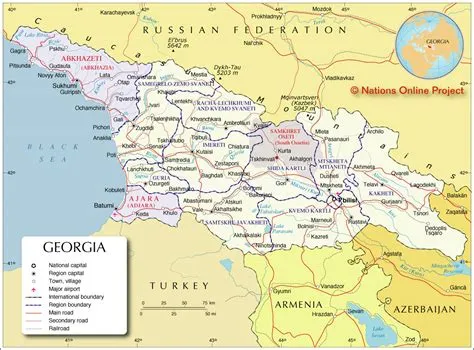
Georgia is the last of our South Caucasus cuisines (the other two being Armenia and Azerbaijan). While the three countries do have distinct national cuisines, there are of course similarities between all three. Georgia, much like its neighbours, has a cuisine informed by its tall mountains and harsh winters, with a heavy emphasis on dairy, herbs, walnuts, and herd meat. Cuisine from Georgia’s coastal regions includes seafood, and all of it is heavily influenced by Georgia’s historic placement on the Silk Road. Spices from across Asia permeate Georgian cuisine, giving it an utterly unique character that I, frankly, cannot do justice to.
Core to this unique character, though, is its coupling with its origin mythos. A national cuisine is a national cuisine because it originated in that nation, and that is especially true of khinkali. The legend of khinkali has its origins in the mountains north of Tbilisi, initially being filled with lamb to help shepherds weather the harsh mountain winters. There, it was invented, and there, it became a fundamental part of Georgian identity.
The reality of food, though, is that its origins are rarely so clear-cut, and khinkali is no exception. The irony, though, is that in exploring the true origins of khinkali, we can instead tell a greater story of Georgian identity and how its history is reflected in its dumplings.
 Actual khinkalis, because I do not want you leaving here thinking mine are correct. They are not. (Source: Tasteatlas.com)
Georgia is ancient. Humans have inhabited Georgia for at least 1.8 million years, with its then temperate and lush climate serving as a refuge from the harsh Pleistocene climate surrounding it. It is the source of some of the earliest archaeological evidence of textiles, some of the earliest evidence of wine cultivation, and some of the earliest evidence of gold mining. To say it is ancient is understating just how old human civilisation in Georgia is. Activities we now consider fundamental to human civilisation were being practiced in Georgia potentially before people had arrived in the Americas.
Throughout that history, however, Georgia has rarely remained isolated. Despite its high peaks, those living in Georgia have consistently traded and diplomised with their neighbours. Ancient Greek myth described Georgia as a place of wealth and prosperity, a myth which fuelled its unification after its conquest by Alexander the Great, and its continued relationship with Rome afterwards.
While Georgia as a kingdom maintained varying degrees of independence, that independence has rarely been a unified one. Georgia has come, at varying points, under the influence or even rule of all of its neighbours, from Rome to the Byzantines (don’t at me, I swear I know my history) to Arabs to Mongols to Persians to Ottomans to Russians. And yet, despite the long history of conquest, Georgian identity persisted, remaining absolutely distinct, while still being shaped, both by conquest, and by trade.
 13th century portrait of Queen Tamar, the first independent queen of Georgia (Source: Wikipedia)
This brings me back to the khinkali, and the idea of a cuisine springing out of any place truly independently. I’ve been referring to khinkali as “dumplings” throughout, and while part of that is me wanting to vary my vocabulary so I don’t say the same word over and over, part of it is that they are, obviously, within the grand family of dumplings. Looking at them, they resemble any number of other dumplings, from Chinese xialongbaos to Nepali momos to Turkic mantis. Beyond the obvious resemblance, the idea of wrapping dough around a tasty filling is a near-universal human experience, with ravioli, croquettes, Hot Pockets, and tamales all being forms of dumpling. As many things as were discovered independently in Georgia, it seems unlikely that khinkali is one of them.
In sketching the history of khinkali, more likely, khinkali, like a great many other influences on Georgian cuisine, found its way into Georgia either with the Mongols or along the Silk Road, travelling from the far reaches of Asia west, where they found a cozy home in among shepherds looking for a warm meal.
However, that this form of dumpling wasn’t invented in Georgia doesn’t mean the khinkali itself wasn’t. Despite its resemblance to other dumplings, khinkali is a uniquely Georgian dish, not because the concept itself originated in Georgia, but because the end product was absolutely assembled there. The beauty of khinkali is that this particular iteration of dumpling could only originate in the unique setting of Georgia. It is a product of the spices of the Silk Road, the geography of the Caucasus, and the influence of all its neighbouring dumplings.
The khinkali is uniquely Georgian, a product of millennia of people finding Georgia and making it their home, and leaving something of themselves behind.