

Vegan Kleina
Ingredients
2 cups (250g) flour
1/2 cup (100g) sugar
1/4 cup (50g) vegan butter
1/4 cup (60g) applesauce
1/2 cup (115ml) non-dairy milk
1/2 cup (115ml) non-dairy creme fraiche
2 tsp baking powder
1/2 tsp baking soda
1/2 tsp cloves
1/2 tsp ginger
1/2 tsp cardamom
1/2 tsp cinnamon
Instructions
- Add all dry ingredients to a bowl. Sift together, then add the butter, cutting it in.
- Mix the butter into the dry ingredients, creating a clumpy dough.
- Combine all wet ingredients in a measuring cup, then add to the dry ingredients. Combine to form a sticky dough.
- Heat oil over medium-high heat. When hot enough, add a spoonful of batter at a time to the oil, flattening with either a knife or the back of a spoon.
- Fry each kleinur for 1 minute per side, or until puffy and golden.
- Remove and dry on a paper towel drying rack, then serve with powdered sugar, vegan honey, or jam.
A longer and more detailed description
I’ll go ahead and address the elephant in the room - I’m aware these are the wrong shape. But look, here’s my confession. Despite my love of baking, I despise the sensation of sticky dough. I hate how it sticks to my fingers. I hate how it makes a mess. I hate sticky dough. It’s why, if you’ve been following my recipes, you’ll notice my doughs tend to be dry, and I don’t tend to stick my hands in them. Making kleina with the correct shape necessitates sticking my hands in sticky dough, so I didn’t. I apologise, Iceland. Ég biðst um afsökunar.
If you would like to make these the correct shape, I’ll include instructions on how to do so, though know I didn’t try it myself. Proceed at your own delicious risk.
Until that point, though, let’s make some delicious treats! Start by combining your dry ingredients in a bowl and giving them a lovely sift until everything melds together. Add in the butter, give it another mixy mix until everything is crumbly, and then pull out your biggest measuring cup. Add all liquid ingredients to the measuring cup, mix it with the random spoon you found on the counter, then add it to the dry ingredients. Give everything another mixy mix until it’s all good and sticky, and prepare your oil.
Here’s your decision point. If you don’t mind getting sticky, great! Flour up a work surface, slam that dough on it, and roll it out until it’s thin. Cut it into diamonds, slice a hole in the middle of the diamond, and pull the top point of the diamond through to create a little bow.
If you do not want to do this, never fear! Your kleina will still be amazing. Just blop them into the hot oil and fry until they puff up and their bottoms turn brown. Flip them, fry them, and remove them to dry. Repeat until you have no more dough. Serve with powdered sugar, vegan honey, jam, or whatever topping you think is good for deep fried dough. Gjörið svo vel!
Substitutions and suggestions
For the applesauce: Applesauce is subbing in for eggs here. Feel free to use whatever egg substitute you like, though I really enjoyed the extra sweetness the applesauce gave the kleina.
For the creme fraiche: This is subbing in for cream. You can use a vegan cream, sour cream, or yoghurt, but again, I liked the extra sweetness of the creme fraiche.
What I changed to make it vegan
The heart and very raison d’etre of kleina is its cream and sugar, so of course, I removed part of its very soul. Oops.
What to listen to while you make this
I have a frankly weird amount of Icelandic music in my standard repertoire. Iceland has a lovely density of musicians in its tiny population. While Sigur Ros and Bjork are excellent, I’m going to recommend a band I’ve been listening to since high school, Jeff Who. They have two excellent albums, then dropped off the face of the Earth, and I know all the words to every song.
Ég þarf að þið hringið í mig. Hljómsveitin verður að sameinast aftur.
A brief context for this dish
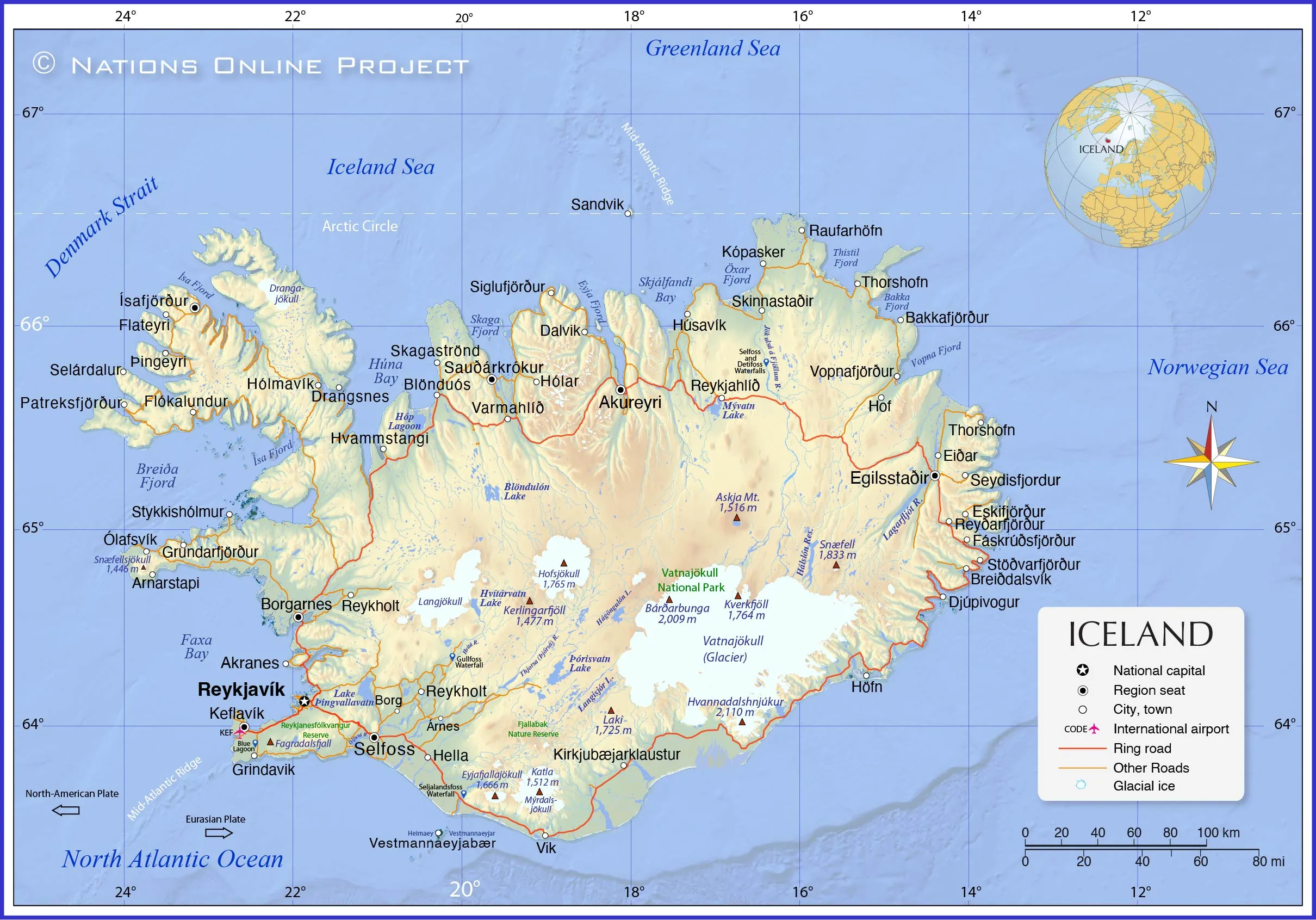
Iceland might be the cuisine I struggled the most with veganising. Its national dish is fermented shark. By virtue of being an island located just below the Arctic Circle and in the frigid waters of the north Atlantic, much of its cuisine is centred around meat, fish, and cheese. While Iceland has historically had subsistence farming, these are nowhere near as robust as found in other Scandinavian cuisines. Vegetables themselves weren’t farmed on any kind of large scale prior to the Napoleonic Wars and the disruption to trade routes. Icelandic bread is a hardy rye bread, but I do not like this bread, and I am bad at making bread, so I didn’t make it. Icelandic cuisine is a cuisine of the extremes, the product of a harsh Arctic environment, few natural resources, and the very human desire to nonetheless live and thrive at the very edge of the possible.
So we’ve made kleina, one of the few Icelandic dishes I was confident I could veganise. Plus, who doesn’t love deep fried dough?
 Kleina for sale in a bakery in Reykjavik (Source: Visiticeland.com)
Kleina, like many of the dishes in this series, are not unique to Iceland. Instead, kleina are a Scandinavian pastry, found throughout the Scandinavian countries, albeit with different names. Klenät, kleinur, klena, klejne, kleina, kleyna, and fattigmann are not cousins so much as siblings, different iterations of the same idea. Within those iterations, though, is the knowledge that each country’s approach to kleina is different. With Iceland in particular, not only do Icelandic bakers use different spices - sometimes infusing the kleina with Arctic moss or other local ingredients - but their kleina are larger, fluffier, and served year round, creating a treat that is a core part of the culture.
Kleina were also not invented in Iceland, but rather, brought to Iceland by the Danish as part of Danish rule, the history of which is deeply complicated. Kleina themselves date back to at least the 14th century, with the first Icelandic versions appearing in cookbooks in the 19th century. Danish rule in Scandinavia meant that Danish klejne spread throughout Scandinavia, though again, with different names and combinations of toppings or spices.
 Reykjavik in 1900, taken by Frederick W.W. Howell (Source: Cornell University Library via Laxnessintranslation.blogspot.com)
In some ways, kleinur are a representation of Scandinavia and its people. It is not a food that has ever been isolated to one particular group or location, but instead, followed the currents and the waves to new shores, becoming part of new traditions. It followed armies, sailors, and trade routes to become part of the tapestry of exploration. When Icelanders left Iceland en masse for the New World in the 19th century, they brought kleinur with them, making them part of Manitoba’s traditions as well. They are deceptive in their simplicity, delicious but hearty, filling the body and soul alike.