

Vegan Tiramisu
Ingredients
For the ladyfingers:
1/2 cup (120ml) aquafaba (liquid from a can of chickpeas)
1/2 cup (125g) sugar
1 cup (250g) flour
1 tsp baking powder
2 tsp vanilla
2 tbsp oil
For the flavouring:
2/3 cup (150ml) strong coffee
3 tbsp rum
6 tbsp sugar
For the cream layer:
3/4 cup (170g) vegan butter
1.5 cups (350g)(one block) silken tofu
1/2 cup (120ml) yoghurt
1/2 cup (120g) sugar
1 tbsp vanilla
Cocoa for dusting
Instructions
For the ladyfingers:
- Preheat the oven to 350F(180C).
- Whisk the aquafaba for ~5 minutes until it stiffens. Add sugar, and whisk again for another ~5 minutes until it forms strands. Add vanilla and oil and stir to combine. Set aside.
- Sift together flour and baking powder.
- Add the aquafaba mixture to the flour, stirring continuously to form a smooth batter.
- Place the batter on your baking tray one spoonful at a time, spacing the cookies out sufficiently.
- Bake for 15 minutes or until golden brown.
For the tiramisu:
- Mix the coffee, rum, and sugar in a bowl big enough to dunk the ladyfingers in. Stir until well combined.
- Dunk each ladyfinger in the mixture, leaving it in until soaked, but not falling apart. Place each sopped cookie into the cake pan to form a layer of cookies.
- Once a row is complete, make the cream. Combine butter, tofu, yoghurt, sugar, and vanilla in a blender. Blend until smooth. Add half the cream to the layer of cookies, ensuring it's distributed smoothly.
- Continue the dunking process to make another layer. Once that layer is complete, add more cream, then lightly dust with cocoa powder. Smooth this out, then pop in the fridge for several hours.
A longer and more detailed description
Tiramisu feels like it should be one of those desserts that’s horrifically fancy to make - I’m getting flashbacks to my Sachertorte - but yet somehow, despite all the steps and all the ingredients, it’s weirdly accessible. This is a recipe that strives for fanciness, gives off the oeuvre of fanciness, and yet, when everything is said and down and you’re staring at a piece of cake, it’s not all that fancy.
All that to say, you can do this. I believe in you. Let’s make a tiramisu.
Start by making ladyfingers (or, if you found vegan ladyfingers in whatever magical place you are that sells that kind of thing, fetch your box of ladyfingers). These can be made the fancy, correct way, or they can be made the “I’m going to smash you up in a cake so the shape doesn’t matter” way. If you want to make them the fancy way, you’ll need a pipe thingy. I recommend my way.
Fetch that can of chickpeas you’re making dinner with later this week and drain it. Whisk that liquid until it does weird, inexplicable things, then dump sugar on it in an attempt to tame it. This won’t work, but it will make the liquid pretty, and that’s sort of the same thing. Add vanilla and oil, give it all a mixy mix, then leave it while you go do something else.
Sift together your flour and baking powder. That was the something else. Back to the aquafaba!
Pour the aquafaba into the flour, stirring as you do so, presumably by propping a bowl in your armpit while you mutter about stupid recipes that require more hands than you actually have. If anyone offers to help with this part, tell them no and to sit down so you can bake them a pretty cake. You do not need to tell them this is a no-bake cake. They do not need to know that part.
Once everything’s mixed, add your cookies to a baking tray one spoonful at a time, then bake for fifteen minutes, or until you’re tired of waiting for things to bake. That’s the first step done!
Remember. You can do this. Tiramisu looks fancy, but you’re fancier, and you can win against this cake.
While your cookies are baking, make both the cookie dunk and the cream. Combine coffee, rum, and sugar in a cup (pro-tip! do not chug this mixture afterwards), then set it aside. Add your yoghurt, tofu, vanilla, butter, and sugar to your blender, and blend until smooth. Done!
Once the cookies are ready, dunk them one by one in your forbidden cocktail. Dunk them until they’re soppy but not soggy (you’ll know the distinction when your heart tells you). Add them to the bottom of whatever dish you’re using as your cake pan until you have a solid layer of cookie. Pour half your cream over it, then repeat until you are out of cookies. If you have to shove some in, fine. It’s all going to the same place anyway. Finish with a layer of cream, dust it with cocoa, then pop it in the fridge for several hours.
Oh, right. You probably should have told your hungry partner that this is a dessert for later, not now, and that he can make his sad eyes somewhere else. Comfort your grieving partner with a healthy snack, like the strawberries you were planning on topping your tiramisu with, only you and I both know this isn’t a dish that’s getting a “topping.” We’ve both seen the picture. This is a “glob on a plate” dish, and the best those strawberries can do is add a bit of colour after the fact. So go ahead and eat them - strawberries are good regardless. Buon appetito!
Substitutions and suggestions
For the ladyfingers - If you can buy vegan ladyfingers, that will save you some effort. I’ll give you a hint, though - you can’t buy vegan ladyfingers.
For the yoghurt and tofu - I think a watered down cream cheese might work well here as well. I didn’t try it though, because I now live in New Zealand, which somehow has an even more dire food selection than the Netherlands. I am so sorry for all the mean things I said about you, Albert Heijn. I didn’t mean them. Please don’t leave me like this.
For the vanilla - If you hate yoghurt like I do, the vanilla is not optional. Add more. It’s the only way to drown out the yoghurt’s shrieks.
For the aquafaba - You can just buy aquafaba instead of getting chickpea water, but why would you? This is easy. Don’t complicate this for yourself.
What I changed to make it vegan
I have made an Italian nonna cry somewhere by doing this, and I’m not sorry.
More specifically, tiramisu is made from cookies (not vegan), egg yolks (not vegan), and marscapone (not vegan) all mixed together in a nice cake. I did none of that, and I fully acknowledge that what I made neither looks nor tastes like authentic tiramisu. What I did make, though, tastes lovely and can plausibly call itself vegan tiramisu, which is all I ever ask for.
What to listen to while you make this
May I suggest the absolutely delightful work of Sardinian singer Iosnouncane? I promise you’re not prepared for it.
A bit more context for this dish
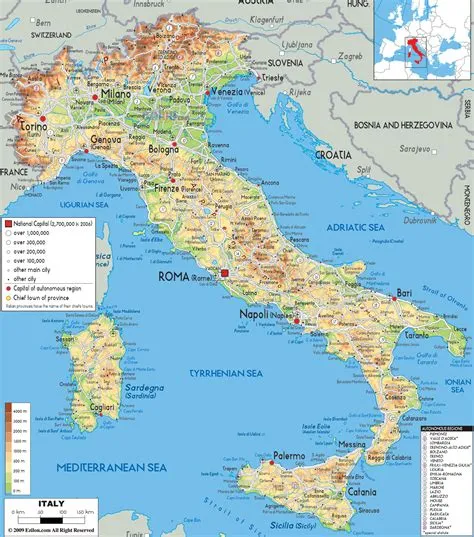
Italian cuisine, like many of the cuisines in this series, is a bit of a misnomer. There are many different cuisines that, through a long series of political manoeuvrings and twists of fate, have now been smashed together into the modern nation of Italy and into the umbrella of Italian cuisine. There are dishes in Italian cuisine that are millennia old. You’ll find Mediterranean and Alpine cooking, pasta and pizza and calzones, staples of the modern world alongside lampredotto, coratella, and casu fragizu (the last of which required a special waiver from the European Union to be sold).
What Italian cuisine does have in common across the peninsula and islands is the idea that a few excellent ingredients cooked simply and well are superior to a wide variety of ingredients cooked in a complex way. It is, in some ways, the antithesis of French cuisine, and may be why it’s pasta that is a staple in every household in the western hemisphere as opposed to baguettes.
Tiramisu, though it isn’t that complicated to make, is perhaps a challenge to that idea of simplicity, less so because of its ingredients, but instead because of the complex narrative that surrounds what it is and where it originated.
 Alle Beccherie in Treviso, one of the potential origins of tiramisu (Source: Accademia del Tiramisu)
Tiramisu is not an ancient dish, though how old it actually is is a matter of contention. The most common - and vehemently defended - understanding of its origins is that it was invented in 1969 by Ada Campeol and his wife, Alba di Pillo in their cafe, Alle Beccherie in Treviso. In this version of the story, Alba needed a boost to get her energy back up after giving birth. She and Ada concocted a simple cake - eggs, marscapone, cookies, and coffee - and with it, she had the energy to go back to her day. They named their creation “tirame su” or “pick-me-up” and sold it in their cafe, where it became a success. The dish spread from there, first being documented in an Italian cookbook in 1981, then becoming popular in the United States in the 1990s. When Campeol died in 2021, he died as the “father of tiramisu.”
This is, however, not the only potential origin of tiramisu. There are several.
 Ado, Alba, and a tiramisu (Source: Telangana Today)
Another narrative about the origin of tiramisu instead places its origins in Friuli-Venezia Giulia, near the Slovenian border in the 1935. Here, a pastry chef named Mario Cosolo working in the village of San Canzian D’Isonzo invented a dish he called “tireme su” in honour of King Vittorio Emanuele III, with it later being served to the king on the royal yacht. This version is not the cream and cookie concoction we might identify as modern tiramisu, but was instead served in a cup, with sponge cake, whipped cream, and marsala wine. The ingredients were there, but the construction wasn’t.
 Tireme su, as envisioned by Mario Cosolo (Source: De Gusto)
There are more narratives. Another version comes from Carminantonio Iannaccone who claims that, in 1969, he invented tiramisu in his Milanese cafe, Piedigrotta. There, his elegant, sophisticated cake became wildly popular, spreading across Italy. It was first documented in an Italian cookbook in 1981, then spread to the United States in the 1990s. Importantly, marsala wine was an important part of Iannaccone’s recipe from the beginning (or so he claims), while the same is not true of Campeol’s. Iannaccone’s cake, though, is firmer and more time-intensive than Campeol’s. Most importantly, however, neither chef documented their invention until after the fact. For both chefs, it was a cake, and cakes are not worth patenting.
There are more origin stories.
 Carminantonio Iannaccone, his wife, and a tiramisu in Baltimore (Source: Washington Post)
Another story has the tiramisu originating in the early 1900s in Sacile. Here, Catina ran a canteen where she served dolce livenza, a layered cake with layers of sponge cake, cream, eggs, sugar, coffee, and rum. This one, rather than using marscapone, used pure cream, creating a creamier cake than modern tiramisu, but still a cake that could be a variation on tiramisu. After all, if we can make a cake with yoghurt and tofu and call it tiramisu, couldn’t Catina do the same?
Another origin places tiramisu in a brothel in Treviso in the 1800s. Here, both men needing an aphrodisiac and women needing more energy would be served a cake of biscuits, cream, eggs, sugar, and coffee. It remained a favourite in Treviso, until popularised by Alle Beccherie in the 1970s. The dish, however, existed long before then, invented by women plying their trade.
Yet another points out tiramisu’s resemblance to sbatudin, a treat local to Veneto, and consisting of egg yolks beaten with sugar. This would be served to newlyweds on their wedding night as a combination aphrodisiac and pick-me-up, helping them have the energy to make it through the night.
There are more, but I think you get the idea.
 Sbatudin (Source: Tiramisu World Cup)
The joy of discovering the origins of food is that, sometimes, there can be a single person who is the inventor of a dish. When we discussed Belgian friet sauces, for example, there are clear inventors of some sauces, but not others.
Tiramisu is a dish that falls into the quintessential Italian cuisine. Because it is simple, it is entirely possible that it was “invented” in multiple places by multiple people with variations, but as something recognisable as tiramisu. Beating eggs and mixing it with sugar, then mixing it again and pouring it on cake is simple. It uses relatively few ingredients, and those ingredients are ones that everybody has. Its invention was inevitable.
All these stories could be true, or none of them. It could be that everyone took what was around them to create something delicious. It’s the eternal story of human cuisine, and it’s deeply endearing. What is undeniably true, though, is that tiramisu is a delight. However many times it arose and wherever it did, it has brought joy to the world.
Besides, in the words of Iannaccone, “It’s just a cake.”